
 Joel and Ethan Coen, known collectively as The Coen Brothers, are four-time Academy Award winning American filmmakers. For more than 20 years, the pair have written and directed numerous successful films, ranging from screwball comedies (O Brother, Where Art Thou?, Raising Arizona, The Hudsucker Proxy) to film noir (Miller's Crossing, Blood Simple, The Man Who Wasn't There, No Country for Old Men), to movies where those two genres blur together (Fargo, The Big Lebowski, Barton Fink). The brothers write, direct and produce their films jointly, although until recently Joel received sole credit for directing and Ethan for producing. They often alternate top billing for their screenplays while sharing film credits for editor under the alias "Roderick Jaynes". They are known in the film business as "the two-headed director", as they share such a similar vision of what their films are to be that actors say that they can approach either brother with a question and get the same answer.
 Joel Coen (born November 29, 1954) and Ethan Coen (born September 21, 1957) grew up in St. Louis Park, Minnesota, a suburb of Minneapolis. Their parents, Edward and Rena Coen, both Jewish, were professors, their father an economist at the University of Minnesota and their mother an art historian at St. Cloud State University.
When they were children, Joel saved money from mowing lawns to buy a Vivitar Super 8 camera. Together, the brothers remade movies they saw on television with a neighborhood kid, Mark Zimering ("Zeimers"), as the star. Their first attempt was a romp titled, Henry Kissinger, Man on the Go. Cornel Wilde's The Naked Prey (1966) became their Zeimers in Zambia,[3] which also featured Ethan as a native with a spear.
The brothers graduated from St. Louis Park (MN) High School in 1973 and 1976. They both also graduated from Simon's Rock College of Bard (now Bard College at Simon's Rock) in Great Barrington, Massachusetts. Joel then spent four years in the undergraduate film program at New York University where he made a 30-minute thesis film called Soundings. The film depicted a woman engaged in sex with her deaf boyfriend while verbally fantasizing about having sex with her boyfriend's best friend, who is listening in the next room.[citation needed] Ethan went on to Princeton University and earned an undergraduate degree in philosophy in 1979. His senior thesis was a 41-page essay, "Two Views of Wittgenstein's Later Philosophy."
In the late 70s both brothers lived in the Weinstein dormatory at 5-11 University Place, an NYU dorm noted for housing such creatives as Ralph Bakshi, Rick Rubin (Def Jam), and film makers Chris Columbus and Dan Goldman (Mr. Danny).
When they were children, Joel saved money from mowing lawns to buy a Vivitar Super 8 camera. Together, the brothers remade movies they saw on television with a neighborhood kid, Mark Zimering ("Zeimers"), as the star. Their first attempt was a romp titled, Henry Kissinger, Man on the Go. Cornel Wilde's The Naked Prey (1966) became their Zeimers in Zambia,[3] which also featured Ethan as a native with a spear.
The brothers graduated from St. Louis Park (MN) High School in 1973 and 1976. They both also graduated from Simon's Rock College of Bard (now Bard College at Simon's Rock) in Great Barrington, Massachusetts. Joel then spent four years in the undergraduate film program at New York University where he made a 30-minute thesis film called Soundings. The film depicted a woman engaged in sex with her deaf boyfriend while verbally fantasizing about having sex with her boyfriend's best friend, who is listening in the next room.[citation needed] Ethan went on to Princeton University and earned an undergraduate degree in philosophy in 1979. His senior thesis was a 41-page essay, "Two Views of Wittgenstein's Later Philosophy."
In the late 70s both brothers lived in the Weinstein dormatory at 5-11 University Place, an NYU dorm noted for housing such creatives as Ralph Bakshi, Rick Rubin (Def Jam), and film makers Chris Columbus and Dan Goldman (Mr. Danny).
Joel has been married to actress Frances McDormand since 1984. They have adopted a son from Paraguay named Pedro McDormand Coen (Frances and all her siblings are adopted themselves). McDormand has starred in five of the Coen Brothers' films, including a minor appearance in Miller's Crossing, a supporting role in Raising Arizona, and lead roles in Blood Simple, The Man Who Wasn't There, and her Academy Award winning role in Fargo.
Ethan is married to film editor Tricia Cooke.
Both couples live in New York City, though they do not with each other.
Ethan is married to film editor Tricia Cooke.
Both couples live in New York City, though they do not with each other.
After graduating from NYU Joel worked as a production assistant on a variety of industrial films and music videos. He developed a talent for film editing and met Sam Raimi who was looking for an assistant editor on his first feature film The Evil Dead (1981).
In 1984 the brothers wrote and directed Blood Simple, their first film together. Set in Texas, the film tells the tale of a shifty, sleazy bar owner who hires a private detective to kill his wife and her lover. Within this film are considerable elements that point toward their future direction: their own subverted homages to genre movies (in this case noir and horror) and clever plot twists layered over a simplistic story; their darkly inventive and twisted sense of humor; and their mastery of atmosphere. The film starred Frances McDormand who would go on to feature in many of the Coen brothers' films (and marry Joel Coen). Upon release the film received much praise and especially amongst the more 'left field' viewers and won awards for Joel's direction at both the Sundance and Independent Spirit awards.
The next Coen brothers project to hit the big screen was 1985s Crimewave directed by Sam Raimi. The film was written by the brothers and Sam Raimi with whom Joel had worked on The Evil Dead.
The next film written and directed by the brothers was the 1987 release Raising Arizona. The film is the story of the unlikely married couple ex-convict Hi (played by Nicolas Cage) and ex-cop Ed (played by Holly Hunter) who long for a baby but are unable to conceive. Fortune smiles on them when a local furniture tycoon appears on television with his five newly born quintuplets that he jokes 'are more than we can handle'. Seeing this as a 'sign' and an opportunity to redress the natural balance, Hi and Ed steal one of the quintuplets and start to bring up the child as their own. Raising Arizona was much more accessible to the mass market with its innocence and wacky slapstick easing the action along amongst a somewhat darker humour.

In 1984 the brothers wrote and directed Blood Simple, their first film together. Set in Texas, the film tells the tale of a shifty, sleazy bar owner who hires a private detective to kill his wife and her lover. Within this film are considerable elements that point toward their future direction: their own subverted homages to genre movies (in this case noir and horror) and clever plot twists layered over a simplistic story; their darkly inventive and twisted sense of humor; and their mastery of atmosphere. The film starred Frances McDormand who would go on to feature in many of the Coen brothers' films (and marry Joel Coen). Upon release the film received much praise and especially amongst the more 'left field' viewers and won awards for Joel's direction at both the Sundance and Independent Spirit awards.
The next Coen brothers project to hit the big screen was 1985s Crimewave directed by Sam Raimi. The film was written by the brothers and Sam Raimi with whom Joel had worked on The Evil Dead.
The next film written and directed by the brothers was the 1987 release Raising Arizona. The film is the story of the unlikely married couple ex-convict Hi (played by Nicolas Cage) and ex-cop Ed (played by Holly Hunter) who long for a baby but are unable to conceive. Fortune smiles on them when a local furniture tycoon appears on television with his five newly born quintuplets that he jokes 'are more than we can handle'. Seeing this as a 'sign' and an opportunity to redress the natural balance, Hi and Ed steal one of the quintuplets and start to bring up the child as their own. Raising Arizona was much more accessible to the mass market with its innocence and wacky slapstick easing the action along amongst a somewhat darker humour.
Miller's Crossing was released in 1990, a straight-ahead homage to the gangster movie genre. Starring Albert Finney, Gabriel Byrne and future Coen brothers' staple John Turturro, the film is set during the prohibition era of the 1930s and tells the tale of feuding mobs and gangster capers. The film was praised for its dialogue and in-depth characterization. Typical of the brothers' oeuvre are the touches of dark humor and plot twists that were already becoming recurring features of their work.
The Coen brothers' reputation was seemingly enhanced with every subsequent release, but it took a massive leap forward with their next movie, 1991s visually stunning Barton Fink. Barton Fink is set in 1941 and is the story of a New York playwright (the eponymous Barton Fink) who moves to Los Angeles to write a B-movie. He settles down in his hotel apartment to commence the writing but all too soon gets writer's block and allows himself to receive some inspiration from the amiable man in the room next door (played by John Goodman), together with some industry associates. Inspiration comes from the strangest places, and the hotel is definitely unusual and a magnet for the bizarre. Barton Fink was a critical success, garnering Oscar nominations plus winning three major awards at Cannes Film Festival, including the Palme d'Or (Golden Palm). Barton Fink was the first of the brothers' films to use Director of Photography Roger Deakins, a key figure in the brothers' circle over the following 15 years.
In 1994, with their stock at an all-time high, the brothers were able to attempt their first big-budget feature film The Hudsucker Proxy (co-written with Sam Raimi). The story revolves around a man who is made the head of a massive corporation with the expectation that he will ruin the company (so that the board can buy it for next to nothing); instead, he ends up inventing the hula hoop and becomes both a success and a "personality" overnight. The critics were, for once, lukewarm about the film, while Roger Deakins was universally praised for his skill as Director of Photography. The film was generally criticized for being "a pastiche too far."[citation needed] Most critics viewed the film as having nothing new to say due to its constant references and homages to classic movies of the 1930s and 40s. Many were disappointed by the Coens' first attempt at the big league. More significantly, the film proved to be a massive commercial failure, making back only $3 million of its $25 million budget.
Following the commercial failure of The Hudsucker Proxy, the brothers returned to more familiar ground in 1996 with the low-budget noir thriller Fargo. Set in the Coen brothers' home state of Minnesota, the movie tells the tale of Jerry Lundegaard (William H. Macy), a man with a money problem, who works in his father-in-law's car showroom. Jerry is anxious to get hold of some money to move up in the world and hatches a plan to have his wife kidnapped so that his wealthy father-in-law will pay the ransom that he can split with the kidnappers. Inevitably, his best laid plans go wrong when the bungling kidnappers deviate from the agreed non-violent plan and local cop Marge Gunderson (Frances McDormand) starts to investigate the whole affair. A critical and commercial success, with particular praise for its dialogue and McDormand's performance, the film received several awards including a BAFTA Award and Cannes award for direction and two Oscars, one for Best Original Screenplay and a Best Actress Oscar for McDormand.
The Coens' next film would build upon this success and in 1998 The Big Lebowski was released. With its story about "The Dude," an LA slacker (played by Jeff Bridges), used as an unwitting pawn in a fake kidnapping plot with his bowling buddies (Steve Buscemi and John Goodman), the Coens had hit on a film that would provide a mainstream accessibility that they had not enjoyed since Raising Arizona. Despite a lukewarm reception from the critics at the time and only moderate commercial success, the film is now regarded as a cult classic.
The Coen brothers' reputation was seemingly enhanced with every subsequent release, but it took a massive leap forward with their next movie, 1991s visually stunning Barton Fink. Barton Fink is set in 1941 and is the story of a New York playwright (the eponymous Barton Fink) who moves to Los Angeles to write a B-movie. He settles down in his hotel apartment to commence the writing but all too soon gets writer's block and allows himself to receive some inspiration from the amiable man in the room next door (played by John Goodman), together with some industry associates. Inspiration comes from the strangest places, and the hotel is definitely unusual and a magnet for the bizarre. Barton Fink was a critical success, garnering Oscar nominations plus winning three major awards at Cannes Film Festival, including the Palme d'Or (Golden Palm). Barton Fink was the first of the brothers' films to use Director of Photography Roger Deakins, a key figure in the brothers' circle over the following 15 years.
In 1994, with their stock at an all-time high, the brothers were able to attempt their first big-budget feature film The Hudsucker Proxy (co-written with Sam Raimi). The story revolves around a man who is made the head of a massive corporation with the expectation that he will ruin the company (so that the board can buy it for next to nothing); instead, he ends up inventing the hula hoop and becomes both a success and a "personality" overnight. The critics were, for once, lukewarm about the film, while Roger Deakins was universally praised for his skill as Director of Photography. The film was generally criticized for being "a pastiche too far."[citation needed] Most critics viewed the film as having nothing new to say due to its constant references and homages to classic movies of the 1930s and 40s. Many were disappointed by the Coens' first attempt at the big league. More significantly, the film proved to be a massive commercial failure, making back only $3 million of its $25 million budget.
Following the commercial failure of The Hudsucker Proxy, the brothers returned to more familiar ground in 1996 with the low-budget noir thriller Fargo. Set in the Coen brothers' home state of Minnesota, the movie tells the tale of Jerry Lundegaard (William H. Macy), a man with a money problem, who works in his father-in-law's car showroom. Jerry is anxious to get hold of some money to move up in the world and hatches a plan to have his wife kidnapped so that his wealthy father-in-law will pay the ransom that he can split with the kidnappers. Inevitably, his best laid plans go wrong when the bungling kidnappers deviate from the agreed non-violent plan and local cop Marge Gunderson (Frances McDormand) starts to investigate the whole affair. A critical and commercial success, with particular praise for its dialogue and McDormand's performance, the film received several awards including a BAFTA Award and Cannes award for direction and two Oscars, one for Best Original Screenplay and a Best Actress Oscar for McDormand.
The Coens' next film would build upon this success and in 1998 The Big Lebowski was released. With its story about "The Dude," an LA slacker (played by Jeff Bridges), used as an unwitting pawn in a fake kidnapping plot with his bowling buddies (Steve Buscemi and John Goodman), the Coens had hit on a film that would provide a mainstream accessibility that they had not enjoyed since Raising Arizona. Despite a lukewarm reception from the critics at the time and only moderate commercial success, the film is now regarded as a cult classic.
Buoyed by the success of both Fargo and Lebowski, the Coen brothers' next film O Brother, Where Art Thou? (2000) was yet another critical success. Based loosely on Homer's "Odyssey" (complete with a cyclops, sirens, et al.) the story is set in Mississippi in the 1930s and follows a trio of escaped convicts who have absconded from a chain gang and who journey home in an attempt to recover the loot from a bank heist that the leader has buried. But they have no idea what the journey is that they are undertaking. The film also highlighted the comic abilities of George Clooney who starred as the oddball lead character of Ulysses Everett McGill (ably assisted by his sidekick, the now ubiquitous John Turturro). The film's Bluegrass soundtrack, offbeat humor and, yet again, stunning cinematography, meant it was a critical and commercial hit. The soundtrack CD became even more successful than the film, spawning a concert, a concert DVD of its own (Down from the Mountain) and coinciding with a resurgence in interest in American folk music.
The Coen brothers changed the pace in 2001 with another noirish thriller, The Man Who Wasn't There. Set in late 1940s California, the film tells the tale of a laconic chain smoking barber (played by Billy Bob Thornton), who in an effort to get some money together to invest in a dry cleaning business, decides to blackmail his wife's boss, who is also her lover. Unusual for a contemporary film, it was presented, though not shot, entirely in black and white. The film's twists and turns and dark humor were typical of Coen films, but here the slow deliberate build of the thriller, its dead-end roads and black and white look meant that the film was more for the purists rather than for the casual audience.
Intolerable Cruelty, arguably the Coens' most mainstream release, was released in 2003 and starred George Clooney and Catherine Zeta-Jones. The film was a throwback to the romantic comedies of the 1940s with a story based around Miles Massey, a hot shot divorce lawyer, and a beautiful divorcee whom Massey had managed to stop getting any money from her divorce. She sets out on a course to get even with him while he becomes smitten with her. Intolerable Cruelty divided the critics, some applauding the romantic screwball comedy elements of the movie, others enquiring as to why the Coens would wish to supply us with their take on this genre. Either way, the general feeling was that the film was not entirely satisfying, and the film proved to be only a moderate commercial success.
In 2004, the Coen brothers released The Ladykillers, a remake of the Ealing Studios classic. The story revolves around a professor (played by Tom Hanks) who puts together a team to rob a casino. They rent a room in an elderly woman's house to execute the heist. When the woman discovers the plot, however, the gang decides to murder her to ensure her silence. This is easier said than done. The Coens received some of the most lukewarm reviews of their career with this movie; much criticism surmised that while the Coens have managed to make films in which a genre can be homaged or pastiched successfully, a relatively faithful reworking of an individual classic did not give them enough creative leeway to place a complete trademark touch on their work.
The Coens' latest movie No Country for Old Men was released in November 2007. Based on the 2005 novel by the author Cormac McCarthy, the film tells the tale of a man named Llewelyn (Josh Brolin) living on the Texas / Mexico border who stumbles upon two million dollars in drug money that he decides to pocket. He then has to go on the run to avoid those looking to recover the money, including a sinister killer (Javier Bardem) who confounds both Llewelyn and the local sheriff (Tommy Lee Jones). This plot line is a return to the dark, noir themes which have provided the Coens with some of their most successful material, but it also marks a notable departure, including a lack of regular Coen actors (with the exception of Stephen Root), a less pronounced comedic element and minimal use of music. The film has received nearly universal critical praise, garnering a 95% "Fresh" rating at Rotten Tomatoes[1]. The film won four Academy Awards, including Best Picture, Best Director, and Best Adapted Screenplay, all of which were received by the Coens, as well as Best Supporting Actor received by Bardem. (The Coens were also nominated for Best Editor, but lost) It was the first time since 1961(Jerome Robbins and Robert Wise for "West Side Story") that two directors had received the honor of Best Director at the same time.
The Coen brothers changed the pace in 2001 with another noirish thriller, The Man Who Wasn't There. Set in late 1940s California, the film tells the tale of a laconic chain smoking barber (played by Billy Bob Thornton), who in an effort to get some money together to invest in a dry cleaning business, decides to blackmail his wife's boss, who is also her lover. Unusual for a contemporary film, it was presented, though not shot, entirely in black and white. The film's twists and turns and dark humor were typical of Coen films, but here the slow deliberate build of the thriller, its dead-end roads and black and white look meant that the film was more for the purists rather than for the casual audience.
Intolerable Cruelty, arguably the Coens' most mainstream release, was released in 2003 and starred George Clooney and Catherine Zeta-Jones. The film was a throwback to the romantic comedies of the 1940s with a story based around Miles Massey, a hot shot divorce lawyer, and a beautiful divorcee whom Massey had managed to stop getting any money from her divorce. She sets out on a course to get even with him while he becomes smitten with her. Intolerable Cruelty divided the critics, some applauding the romantic screwball comedy elements of the movie, others enquiring as to why the Coens would wish to supply us with their take on this genre. Either way, the general feeling was that the film was not entirely satisfying, and the film proved to be only a moderate commercial success.
In 2004, the Coen brothers released The Ladykillers, a remake of the Ealing Studios classic. The story revolves around a professor (played by Tom Hanks) who puts together a team to rob a casino. They rent a room in an elderly woman's house to execute the heist. When the woman discovers the plot, however, the gang decides to murder her to ensure her silence. This is easier said than done. The Coens received some of the most lukewarm reviews of their career with this movie; much criticism surmised that while the Coens have managed to make films in which a genre can be homaged or pastiched successfully, a relatively faithful reworking of an individual classic did not give them enough creative leeway to place a complete trademark touch on their work.
The Coens' latest movie No Country for Old Men was released in November 2007. Based on the 2005 novel by the author Cormac McCarthy, the film tells the tale of a man named Llewelyn (Josh Brolin) living on the Texas / Mexico border who stumbles upon two million dollars in drug money that he decides to pocket. He then has to go on the run to avoid those looking to recover the money, including a sinister killer (Javier Bardem) who confounds both Llewelyn and the local sheriff (Tommy Lee Jones). This plot line is a return to the dark, noir themes which have provided the Coens with some of their most successful material, but it also marks a notable departure, including a lack of regular Coen actors (with the exception of Stephen Root), a less pronounced comedic element and minimal use of music. The film has received nearly universal critical praise, garnering a 95% "Fresh" rating at Rotten Tomatoes[1]. The film won four Academy Awards, including Best Picture, Best Director, and Best Adapted Screenplay, all of which were received by the Coens, as well as Best Supporting Actor received by Bardem. (The Coens were also nominated for Best Editor, but lost) It was the first time since 1961(Jerome Robbins and Robert Wise for "West Side Story") that two directors had received the honor of Best Director at the same time.
 A Coen-testvérek az idén filmtörténetet írhatnak, ha a Nem vénnek való vidék című filmjükért kapott mind a négy jelölésüket (rendezés, legjobb film, forgatókönyv, vágás) díjra váltják. Négy Oscart egy évben eddig csak Walt Disney kapott 1953-ban, testvérek pedig még soha nem vehették át együtt a kitüntetést. Rendezésért megosztott Oscar-díjat egyszer, 1961-ben ítéltek oda a West Side Story-ért. Testvérpárt először 1942-ben jelöltek (a színészek között Joan Fontaine és Olivia de Havilland, Fontaine nyert).
 Hasonlóan bizarr figurákban bővelkedik a Coen-életmű, elég csak A nagy Lebowski Dude-jára (magyarul Töki), az Arizónai ördögfióka gyermektolvaj rendőrnőjére vagy éppen a tudathasadásos forgatókönyvíróra, Barton Finkre gondolni. Ők mindannyian összegyűltek, hogy a New York Times exkluzív fotógalériájában népszerűsítsék a testvérek filmográfiájának legújabb csúcspontját. A No Country-t szűk körben mutatták csak be a hétvégén, de kiváló vászon/néző átlagot produkált és fokozatosan terjeszkedik majd az Egyesült Államokban, hogy a díjeső szempontjából kulcsfontosságú decemberben már mindenhol láthassák A kritikusok körében egyelőre páratlan konszenzus alakult ki arról, hogy ez az év legjobb amerikai filmje és végre egy "legjobb rendező" Oscar sem tűnik elérhetetlennek a két testvér számára.


 Isaac Asimov (
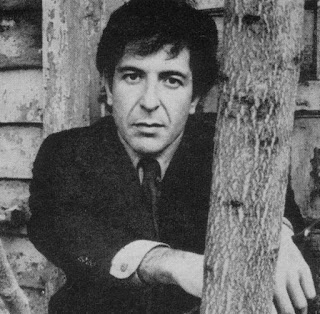 Leonard Norman Cohen (


.jpg)


