S. Samyro, a partial
anagram of Samy Rosenstock, was used by Tzara from his debut and throughout the early 1910s.
[2] A number of undated writings, which he probably authored as early as 1913, bear the signature Tristan Ruia, and, in summer of 1915, he was signing his pieces with the name Tristan.
[3][4]In the 1960s, Rosenstock's collaborator and later rival Ion Vinea claimed that he was responsible for coining the Tzara part of his pseudonym in 1915.
[3] Vinea also stated that Tzara wanted to keep Tristan as his adopted first name, and that this choice had later attracted him the "infamous pun" Triste Âne Tzara (
French for "Sad Donkey Tzara").
[3] This version of events is uncertain, as manuscripts show that the writer may have already been using the full name, as well as the variations Tristan Ţara and Tr. Tzara, in 1913-1914 (although there is a possibility that he was signing his texts long after committing them to paper).
[5]In 1972, art historian
Serge Fauchereau, based on information received from Colomba, the wife of avant-garde poet
Ilarie Voronca, recounted that Tzara himself had explained his chosen name was a pun on the
Romanian-language trist în ţară ("sad in one's country"); Colomba Voronca was also dismissing rumors that Tzara had selected Tristan as a tribute to poet
Tristan Corbière or to
Richard Wagner's
Tristan und Isolde opera.
[6] Samy Rosenstock legally adopted his new name in 1925, after filing a request with Romania's
Ministry of the Interior.
Tzara was born in
Moineşti,
Bacău County, in the
historical region of
Moldavia. His parents were
Jewish Romanians who reportedly spoke
Yiddish as their first language;
[7] his father Filip and grandfather Ilie were entrepreneurs in the forestry business.
[8][9] Tzara's mother was Emilia Rosenstock, née Zibalis.
[9] Owing to the
Romanian Kingdom's discrimination laws, the Rosenstocks were not
emancipated, and thus Tzara was not a full citizen of the country until after 1918.
[8]He moved to
Bucharest at the age of eleven, and attended the Schemitz-Tierin
boarding school.
[8] It is believed that the young Tzara completed his secondary education at a state-run high school, which is identified as the
Saint Sava National College[8] or as the Sfântul Gheorghe High School.
[10] In October 1912, when Tzara was aged sixteen, he joined his friends Vinea and Marcel Janco in editing
Simbolul. Reputedly, Janco and Vinea provided the funds.
[11] Like Vinea, Tzara was also close to their young colleague
Jacques G. Costin, who was later his self-declared promoter and admirer.
[12]Despite their young age, the three editors were able to attract collaborations from established
Symbolist authors. Alongside their close friend and mentor
Adrian Maniu (an
Imagist who had been Vinea's tutor),
[13] they included
N. Davidescu,
Alfred Hefter-Hidalgo,
Emil Isac,
Claudia Millian,
Ion Minulescu,
I. M. Raşcu,
Eugeniu Sperantia,
Al. T. Stamatiad,
Eugeniu Ştefănescu-Est,
Constantin T. Stoika, as well as from journalist and lawyer
Poldi Chapier.
[14] In its inaugural issue, the journal even printed a poem by one of the leading figures in Romanian Symbolism,
Alexandru Macedonski.
[14] Simbolul also featured illustrations by Maniu, Millian and
Iosif Iser.
[15]Although the magazine ceased print in December 1912, it played an important part in shaping
Romanian literature of the period. Literary historian
Paul Cernat sees Simbolul as a main stage in Romania's
modernism, and credits it with having brought about the first changes from Symbolism to the radical avant-garde.
[16] Also according to Cernat, the collaboration between Samyro, Vinea and Janco was an early instance of literature becoming "an interface between arts", which had for its contemporary equivalent the collaboration between Iser and writers such as
Ion Minulescu and
Tudor Arghezi.
[17] Although Maniu parted with the group and sought a change in style which brought him closer to traditionalist tenets, Tzara, Janco and Vinea continued their collaboration. Between 1913 and 1915, they were frequently vacationing together, either on the
Black Sea coast or at the Rosenstock family property in
Gârceni,
Vaslui County; during this time, Vinea and Samyro wrote poems with similar themes and alluding to one another

It was in this milieu that
Dada was born, at some point before May 1916, when a publication of the same name first saw print. The story of its establishment was the subject of a disagreement between Tzara and his fellow writers. Cernat believes that the first Dadaist performance took place as early as February, when the nineteen-year old Tzara, wearing a
monocle, entered the Cabaret Voltaire stage singing sentimental melodies and handing paper wads to his "scandalized spectators", leaving the stage to allow room for masked actors on
stilts, and returning in clown attire.
[37] The same type of performances took place at the
Zuntfhaus zür Waag beginning in summer 1916, after the Cabaret Voltaire was forced to close down.
[38] According to music historian Bernard Gendron, for at long as it lasted, "the Cabaret Voltaire was dada. There was no alternative institution or site that could disentangle 'pure' dada from its mere accompaniment [...] nor was any such site desired."
[39] Other opinions link Dada's beginnings with much earlier events, including the experiments of
Alfred Jarry,
André Gide,
Christian Morgenstern,
Jean-Pierre Brisset,
Guillaume Apollinaire,
Jacques Vaché,
Marcel Duchamp or
Francis Picabia.
[40]In the first of the movement's manifestos, Ball wrote: "[The booklet] is intended to present to the Public the activities and interests of the Cabaret Voltaire, which has as its sole purpose to draw attention, across the barriers of war and nationalism, to the few independent spirits who live for other ideals. The next objective of the artists who are assembled here is to publish a revue internationale [French for "international magazine"]."
[41] Ball completed his message in French, and the paragraph translates as: "The magazine shall be published in Zürich and shall carry the name 'Dada' ('Dada'). Dada Dada Dada Dada."
[41] The view according to which Ball had created the movement was notably supported by writer
Walter Serner, who directly accused Tzara of having abused Ball's initiative.
[42]A secondary point of contention between the founders of Dada regarded the paternity for the movement's name, which, according to visual artist and essayist
Hans Richter, was first adopted in print in June 1916.
[43] Ball, who claimed authorship and stated that he picked the word randomly from a dictionary, indicated that it stood for both the French-language equivalent of "
hobby horse" and a
German-language term reflecting the joy of children being rocked to sleep.
[44] Tzara himself declined interest in the matter, but Marcel Janco credited him with having coined the term.
[45] Dada manifestos, written or co-authored by Tzara, record that the name shares its form with various other terms, including a word used in the
Kru languages of
West Africa to designate the tail of a sacred cow; a toy and the name for "mother" in an unspecified
Italian dialect; and the double affirmative in Romanian and in various
Slavic languages.
In late 1919, Tristan Tzara left Switzerland to join Breton, Soupault and
Claude Rivière in editing the
Paris-based magazine
Littérature.
[81][25] Already a mentor for the French avant-garde, he was, according to Hans Richter, perceived as an "Anti-
Messiah" and a "prophet".
[82] Reportedly, Dada mythology had it that he entered the French capital in a snow-white or lilac-colored car, passing down
Boulevard Raspail through a
triumphal arch made from his own pamphlets, being greeted by cheering crowds and a fireworks display.
[82] Richter dismisses this account, indicating that Tzara actually walked from
Gare de l'Est to Picabia's home, without anyone expecting him to arrive.
[82]He is often described as the main figure in the Littérature circle, and credited with having more firmly set its artistic principles in the line of Dada.
[83][25] When Picabia began publishing a new series of 391 in Paris, Tzara seconded him and, Richter says, produced issues of the magazine "decked out [...] in all the colors of Dada."
[58] He was also issuing his Dada magazine, printed in Paris but using the same format, renaming it Bulletin Dada and later Dadaphone.
[84] At around that time, he met American author
Gertrude Stein, who wrote about him in
The Autobiography of Alice B. Toklas,
[85] and the artist couple
Robert and
Sonia Delaunay (with whom he worked in tandem for "poem-dresses" and other simultaneist literary pieces).
[86]Tzara became involved in a number of Dada experiments, on which he collaborated with Breton, Aragon, Soupault, Picabia or
Paul Éluard.
[87][1][4] Other authors who came into contact with Dada at that stage were
Jean Cocteau,
Paul Dermée and
Raymond Radiguet.
[88] The performances staged by Dada were often meant to popularize its principles, and Dada continued to draw attention on itself by
hoaxes and
false advertising, announcing that the
Hollywood film star
Charlie Chaplin was going to appear on stage at its show,
[49] or that its members were going to have their heads shaved or their hair cut off on stage.
[89] In another instance, Tzara and his associates lectured at the
Université populaire in front of industrial workers, who were reportedly less than impressed.
[90] Richter believes that, ideologically, Tzara was still in tribute to Picabia's nihilistic and anarchic views (which made the Dadaists attack all political and cultural ideologies), but that it had a measure of sympathy for the
working class.
[91]Dada activities in Paris culminated in the March 1920
variety show at the
Théâtre de l'Œuvre, which featured readings from Breton, Picabia, Dermée and Tzara's earlier work, La Première aventure céleste de M. Antipyrine ("The First Heavenly Adventure of Mr. Antipyrine").
[92] Tzara's melody, Vaseline symphonique ("Symphonic Vaseline"), which required ten or twenty people to shout "cra" and "cri" on a rising scale, was also performed.
[93] A scandal erupted when Breton read Picabia's Manifeste cannibale ("Cannibal Manifesto"), lashing out at the audience and mocking them, to which they answered by aiming rotten fruit at the stage.
[94]The Dada phenomenon was only noticed in Romania beginning in 1920, and its overall reception was negative. Traditionalist historian
Nicolae Iorga, Symbolist promoter
Ovid Densusianu, the more reserved modernists
Camil Petrescu and
Benjamin Fondane all refused to accept it as a valid artistic manifestation.
[95] Although he rallied with tradition, Vinea defended the subversive current in front of more serious criticism, and rejected the widespread rumor that Tzara had acted as an
agent of influence for the
Central Powers during the war.
[96] Eugen Lovinescu, editor of
Sburătorul and one of Vinea's rivals on the modernist scene, acknowledged the influence exercised by Tzara on the younger avant-garde authors, but analyzed his work only briefly, using as an example one of his pre-Dada poems, and depicting him as an advocate of literary "extremism".

During
World War II, Tzara took refuge from the
German occupation forces, moving to the southern areas, controlled by the
Vichy regime.
[1][4] On one occasion, the
antisemitic and
collaborationist publication
Je Suis Partout made his whereabouts known to the
Gestapo.
[149]He was in
Marseille in late 1940-early 1941, joining the group of anti-fascist and Jewish refugees who, protected by American diplomat
Varian Fry, were seeking to escape
Nazi-occupied Europe. Among the people present there were the anti-
totalitarian socialist
Victor Serge, anthropologist
Claude Lévi-Strauss, playwright
Arthur Adamov, philosopher and poet
René Daumal, and several prominent Surrealists: Breton, Char, and
Benjamin Péret, as well as artists
Max Ernst,
André Masson,
Wifredo Lam,
Jacques Hérold,
Victor Brauner and
Óscar Domínguez.
[150] During the months spent together, and before some of them received permission to leave for America, they invented a new
card game, on which traditional card imagery was replaced with Surrealist symbols.
[150]Some time after his stay in Marseille, Tzara joined the
French Resistance, rallying with the
Maquis. A contributor to magazines published by the Resistance, Tzara also took charge of the cultural broadcast for the
Free French Forces clandestine radio station.
[1][4] He lived in
Aix-en-Provence, then in
Souillac, and ultimately in
Toulouse.
[4] His son Cristophe was at the time a Resistant in northern France, having joined the
Franc Tireurs Partisans.
[149] In
Axis-allied and antisemitic Romania, the regime of
Ion Antonescu ordered bookstores not to sell works by Tzara and 44 other Jewish-Romanian authors (see
Romania during World War II).
[151]In December 1944, five months after the
Liberation of Paris, he was contributing to
L'Éternelle Revue, a pro-communist newspaper edited by philosopher
Jean-Paul Sartre, through which Sartre was publicizing the heroic image of a France united in resistance, as opposed to the perception that it had passively accepted German control.
[152] Other contributors included writers Aragon, Char, Éluard,
Elsa Triolet,
Eugène Guillevic,
Raymond Queneau,
Francis Ponge,
Jacques Prévert and painter
Pablo Picasso.
[152]Upon the end of the war and the restoration of French independence, Tzara was
naturalized a French citizen.
[1] During 1945, under the
Provisional Government of the French Republic, he was a representative of the Sud-Ouest region to the
National Assembly.
[139] According to Livezeanu, he "helped reclaim the
South from the cultural figures who had associated themselves to Vichy [France]."
[147] In April 1946, his early poems, alongside similar pieces by Breton, Éluard, Aragon and Dalí, were the subject of a midnight broadcast on
Parisian Radio.
[153] In 1947, he became a full member of the PCF
[68] (according to some sources, he had been one since 1934).
In October 1956, Tzara went visited the
People's Republic of Hungary, where the government of
Imre Nagy was coming into conflict with the
Soviet Union.
[149][156] This followed an invitation on the part of Hungarian writer
Gyula Illyés, who wanted his colleague to be present at ceremonies marking the
rehabilitation of
László Rajk (a local communist leader whose prosecution had been ordered by
Joseph Stalin).
[156] Tzara was receptive of the Hungarians' demand for
liberalization,
[149][156] contacted the anti-
Stalinist and former Dadaist
Lajos Kassák, and deemed the anti-Soviet movement "revolutionary".
[156] However, unlike much of Hungarian public opinion, the poet did not recommend emancipation from Soviet control, and described the independence demanded by local writers as "an abstract notion".
[156] The statement he issued, widely quoted in the Hungarian and international press, forced a reaction from the PCF: through Aragon's reply, the party deplored the fact that one of its members was being used in support of "
anti-communist and anti-Soviet campaigns."
[156]His return to France coincided with the outbreak of the
Hungarian Revolution, which ended with a Soviet military intervention. On October 24, Tzara was ordered to a PCF meeting, where activist
Laurent Casanova reportedly ordered him to keep silent, which Tzara did.
[156] Tzara's apparent dissidence and the crisis he helped provoke within the Communist Party were celebrated by Breton, who had adopted a pro-Hungarian stance, and who defined his friend and rival as "the first spokesman of the Hungarian demand."
[156]He was thereafter mostly withdrawn from public life, dedicating himself to researching the work of 15th century poet
François Villon,
[145] and, like his fellow Surrealist
Michel Leiris, to promoting
primitive and
African art, which he had been collecting for years.
[149] In early 1957, Tzara attended a Dada retrospective on the
Rive Gauche, which ended in a riot caused by the rival avant-garde
Mouvement Jariviste, an outcome which reportedly pleased him.
[168] In August 1960, one year after the
Fifth Republic had been established by
President Charles de Gaulle, at a time when French forces were confronting the
Algerian rebels (see
Algerian War). Together with
Simone de Beauvoir,
Marguerite Duras,
Jérôme Lindon,
Alain Robbe-Grillet and other intellectuals, he addressed
Premier Michel Debré a letter of protest, concerning France's refusal to grant Algeria its independence.
[169] As a result,
Minister of Culture André Malraux announced that his cabinet would not subsidize any films to which Tzara and the others may contribute, and the signatories could no longer appear on stations managed by the state-owned
French Broadcasting Service.
[169]In 1961, as recognition for his work as a poet, Tzara was awarded the prestigious
Taormina Prize.
[1] One of his final public activities took place in 1962, when he attended the
International Congress on African Culture, organized by English curator
Frank McEwen and held at the
National Gallery in
Salisbury,
Southern Rhodesia.
[170] He died one year later in his Paris home, and was buried at the
Cimetière du Montparnasse.
Much critical commentary about Tzara surrounds the measure to which the poet identified with the national cultures which he represented. Paul Cernat notes that the association between Samyro and the Jancos, who were Jews, and their
ethnic Romanian colleagues, was one sign of a cultural dialog, in which "the openness of Romanian environments toward artistic modernity" was stimulated by "young emancipated Jewish writers."
[171] Salomon Schulman, a
Swedish researcher of
Yiddish literature, argues that the combined influence of Yiddish folklore and
Hasidic philosophy shaped European modernism in general and Tzara's style in particular,
[172] while American poet
Andrei Codrescu speaks of Tzara as one in a
Balkan line of "absurdist writing", which also includes the Romanians
Urmuz,
Eugène Ionesco and
Emil Cioran.
[173] According to literary historian
George Călinescu, Samyro's early poems deal with "the voluptuousness over the strong scents of rural life, which is typical among Jews compressed into
ghettos."
[174]Tzara himself used elements alluding to his homeland in his early Dadaist performances. His collaboration with
Maja Kruscek at
Zuntfhaus zür Waag featured samples of
African literature, to which Tzara added Romanian-language fragments.
[78] He is also known to have mixed elements of
Romanian folklore, and to have sung the native suburban
romanza La moară la Hârţa ("At the Mill in Hârţa") during at least one staging for Cabaret Voltaire.
[175] Addressing the Romanian public in 1947, he claimed to have been captivated by "the sweet language of
Moldavian peasants".
[139]Tzara nonetheless rebelled against his birthplace and upbringing. His earliest poems depict provincial Moldavia as a desolate and unsettling place. In Cernat's view, this imagery was in common use among Moldavian-born writers who also belonged to the avant-garde trend, notably
Benjamin Fondane and
George Bacovia.
[176] Like in the cases of Eugène Ionesco and Fondane, Cernat proposes, Samyro sought self-exile to
Western Europe as a "modern,
voluntarist" means of breaking with "the peripheral condition",
[177] which may also serve to explain the pun he selected for a pseudonym.
[6] According to the same author, two important elements in this process were "a maternal attachment and a break with paternal authority", an "
Oedipus complex" which he also argued was evident in the biographies of other Symbolist and avant-garde Romanian authors, from Urmuz to
Mateiu Caragiale.
[178] Unlike Vinea and the
Contimporanul group, Cernat proposes, Tzara stood for radicalism and insurgency, which would also help explain their impossibility to communicate.
[179] In particular, Cernat argues, the writer sought to emancipate himself from competing
nationalisms, and addressed himself directly to the center of European culture, with
Zürich serving as a stage on his way to
Paris.
[78] The 1916 Monsieur's Antipyrine's Manifesto featured a
cosmopolitan appeal: "DADA remains within the framework of European weaknesses, it's still shit, but from now on we want to shit in different colors so as to adorn the zoo of art with all the flags of all the consulates."
[78]With time, Tristan Tzara came to be regarded by his Dada associates as an exotic character, whose attitudes were intrinsically linked with
Eastern Europe. Early on, Ball referred to him and the Janco brothers as "Orientals".
[37] Hans Richter believed him to be a fiery and impulsive figure, having little in common with his German collaborators.
[180] According to Cernat, Richter's perspective seems to indicate a vision of Tzara having a "
Latin" temperament.
[37] This type of perception also had negative implications for Tzara, particularly after the 1922 split within Dada. In the 1940s,
Richard Huelsenbeck alleged that his former colleague had always been separated from other Dadaists by his failure to appreciate the legacy of "
German humanism", and that, compared to his German colleagues, he was "a barbarian".
[110] In his polemic with Tzara, Breton also repeatedly placed stress on his rival's foreign origin.
[181]At home, Tzara was occasionally targeted for his Jewishness, culminating in the ban enforced by the
Ion Antonescu regime. In 1931,
Const. I. Emilian, the first Romanian to write an academic study on the avant-garde, attacked him from a
conservative and
antisemitic position. He depicted Dadaists as "
Judaeo-Bolsheviks" who corrupted
Romanian culture, and included Tzara among the main proponents of "literary anarchism".
[182] Alleging that Tzara's only merit was to establish a literary fashion, while recognizing his "formal virtuosity and artistic intelligence", he claimed to prefer Tzara in his
Simbolul stage.
[183] This perspective was deplored early on by the modernist critic
Perpessicius.
[184] Nine years after Emilian's polemic text,
fascist poet and journalist
Radu Gyr published an article in
Convorbiri Literare, in which he attacked Tzara as a representative of the "
Judaic spirit", of the "foreign plague" and of "
materialist-
historical dialectics".

Tristan Tzara (
Moineşti,
Bacău megye,
1896.
április 16. –
Párizs,
1963.
december 25.) eredeti nevén Sami Rosenstock (felvett neve románul megszomorított országot jelent), román művész. Költő és esszéista, élete nagy részét Franciaországban töltötte.
Nevét a
Dada alapítójaként ismerik. A dadaista avantgárd mozgalom forradalmi hatást gyakorolt a művészetekre.
A
Dada mozgalom az
I. világháború idejéből, Zürichből eredeztethető, Tzara,
Hans Arp, és
Hugo Ball alkotta művészcsoporttól.
Tzara írta az első dadaista írásokat:
La Première Aventure céleste de Monsieur Antipyrine (Antipyrine úr első mennybéli kalandja) (
1916),
Vingt-cinq poèmes (Huszonöt vers) (
1918)
[1], valamint a mozgalom kiáltványát,
Sept manifestes Dada (Hét Dada kiáltvány) (
1924).
Élete meghatározó mozzanata volt, hogy
1919-ben
Párizsba költözött, ahol csatlakozott az
André Breton,
Philippe Soupault és
Louis Aragon alkotta csoporthoz, sok vihart kavaró tevékenységük, a polgárpukassztásra, a nyelvi szerkezetek összezavarására irányult.
1929 végén beleunva a
nihilzmusba és a
destrukcionizmusba, csatlakozott a konstruktívabb
szürrealistákhoz. Ideje nagy részét a szürrealizmus és a
marxizmus összeegyeztetésére fordította. 1947-49 között a szürrealizmus jegyében együtt dolgozott
Joan Miróval, aki nyolc képből álló sorozatot festett Tzara műveihez.
1937-ben csatlakozott a
Francia Kommunista Párthoz. A 1930-as években részt vett a
spanyol polgárháborúban, a
II. világháborúban a francia
Résistance, az ellenállás aktív részese volt. 1956-ban kilépett a kommunista pártból, ezzel tiltakozva a
magyar forradalom szovjet elfojtása ellen.
1986-ban a Francia és a Magyar Írószövetség megalapította a Tristan Tzara fordítói díjat.

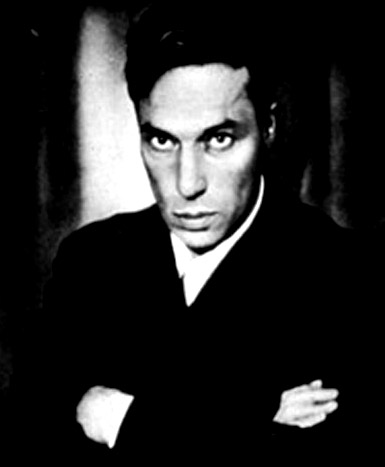 Boris Leonidovich Pasternak (10 February 1890 – 30 May 1960) was a Nobel Prize-winning Russian and Soviet poet, novelist and translator of Goethe and Shakespeare. In Russia, Pasternak is most celebrated as a poet. My Sister Life, written in 1917, is arguably the most influential collection of poetry published in the Russian language in the 20th century. In the West he is best known for his epic novel Doctor Zhivago, a tragedy whose events span the last period of the Russian Empire and the early days of the Soviet Union. It was first translated and published in Italy in 1957. He helped give birth to the dissident movement with the publication of Doctor Zhivago.


.jpg)


