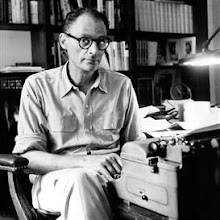
Billy Wilder (22 June 1906 – 27 March 2002) was an Austrian-American journalist, filmmaker, screenwriter and producer, whose career spanned more than 50 years and 60 films. He is regarded as one of the most brilliant and versatile filmmakers of Hollywood's golden age.
Born Samuel Wilder in Sucha Beskidzka, Austria-Hungary (now Poland) to Max Wilder and Eugenia Dittler, Wilder was nicknamed Billie by his mother, because she was fascinated with Billy the Kid when she had visited the United States in her younger days (he changed that to "Billy" after arriving in America). His parents had a successful and well-known cake shop in Sucha Beskidzka's train station and unsuccessfully tried to convince their son to inherit the business. Soon the family moved to Vienna, where Wilder attended school. After dropping out of the University of Vienna, Wilder became a journalist. To advance his career Wilder decided to move to Berlin, Germany.
While in Berlin, before achieving success as a writer, Wilder allegedly worked as a taxi dancer. After writing crime and sports stories as a stringer for local newspapers, he was eventually offered a regular job at a Berlin tabloid. Developing an interest in film, he began working as a screenwriter. He collaborated with several other tyros (with Fred Zinnemann and Robert Siodmak, on the 1929 feature, People on Sunday). After the rise of Adolf Hitler, Wilder, who was Jewish, left for Paris and then the United States. His mother, grandmother and stepfather were murdered at the Auschwitz concentration camp.
After arriving in Hollywood in 1933, Wilder continued his career as a screenwriter. He became a naturalized citizen of the United States in 1934. Wilder's first significant success was Ninotchka1939, in a collaboration with fellow German immigrant Ernst Lubitsch. This screwball comedy starred Greta Garbo (generally known as a tragic heroine in film melodramas), and was popularly and critically acclaimed. With the byline, "Garbo Laughs!", it also took Garbo's career in a new direction (although he and Brackett had already wrote Bluebeard's Eighth Wife and Midnight to great aclaim). The film also marked Wilder's first Academy Award nomination, which he shared with co-writer Charles Brackett. For twelve years Wilder co-wrote many of his films with Brackett, from 1938 through 1950. He followed Ninotchka with a series of box office hits in 1942, including his Hold Back the Dawn and Ball of Fire, as well as his directorial feature debut, The Major and the Minor.
Wilder established his directorial reputation after helming Double Indemnity (1944), a film noir he co-wrote with mystery novelist Raymond Chandler, with whom he did not get along. Double Indemnity not only set conventions for the noir genre (such as "venetian blind" lighting and voice-over narration), but was also a landmark in the battle against Hollywood censorship. The original James M. Cain novel Double Indemnity featured two love triangles and a murder plotted for insurance money. The book was highly popular with the reading public, but had been considered unfilmable under the Hays Code, because adultery was central to its plot. Double Indemnity is credited by some as the first true film noir, combining the stylistic elements of Citizen Kane with the narrative elements of The Maltese Falcon.

Two years later, Wilder earned the Best Director and Best Screenplay Academy Awards for the adaptation of a Charles R. Jackson story The Lost Weekend, the first major American film to make a serious examination of alcoholism, another difficult theme under the Production Code. In 1950, Wilder co-wrote and directed the dark and cynical and critically acclaimed Sunset Boulevard, which paired rising star William Holden with Gloria Swanson. Swanson played Norma Desmond, a reclusive silent film star who dreams of a comeback; Holden is an aspiring screenwriter who becomes a kept man.
In 1951, Wilder followed Sunset Boulevard with Ace in the Hole (a/k/a The Big Carnival), a tale of media exploitation of a caving accident. It was a critical and commercial failure at the time, but its reputation has grown over the years. In the fifties, Wilder also directed two vibrant adaptations of Broadway plays, the POW drama Stalag 17 (1953), which resulted in a Best Actor Oscar for William Holden, and the Agatha Christie mystery Witness for the Prosecution (1957).
From the mid-1950s on, Wilder made mostly comedies.[4] Among the classics Wilder created in this period are the farces The Seven Year Itch (1955) and Some Like It Hot (1959), satires such as The Apartment (1960), and the romantic comedy Sabrina (1954). Wilder's humor is sometimes sardonic. In Love in the Afternoon (1957), a young and innocent Audrey Hepburn who doesn't want to be young or innocent wins playboy Gary Cooper by pretending to be a married woman in search of extramarital amusement.
In 1959 Wilder introduced crossdressing to American film audiences with Some Like It Hot. In this comedy Jack Lemmon and Tony Curtis play musicians on the run from a Chicago gang, who disguise themselves as women and become romantically involved with Marilyn Monroe and Joe E. Brown.
In 1959, Wilder began to collaborate with writer-producer I.A.L. Diamond, an association that continued until the end of both men's careers. After winning three Academy Awards for 1960's The Apartment (for Best Picture, Director, and Screenplay), Wilder's career slowed. His Cold War farce One, Two, Three (1961) featured a rousing comic performance by James Cagney, but was followed by the lesser films Irma la Douce and Kiss Me, Stupid. Wilder garnered his last Oscar nomination for his screenplay The Fortune Cookie in 1966. His 1970 film The Private Life of Sherlock Holmes was intended as a major roadshow release, but was heavily cut by the studio and has never been fully restored. Later films such as Fedora and Buddy Buddy failed to impress critics or the public.
After that Wilder never ceased to complain that Hollywood was making a big mistake by not giving him any films to direct. He did so at film festivals, in interviews, on television, and whenever else he had the chance. He often hinted that he was being discriminated against, due to his age. His complaining didn't help: for whatever reason, Hollywood simply wouldn't hire him, and his directorial career ended.
One "consolation" which Wilder had in his later years, besides his art collection was the Andrew Lloyd Webber musical stage version of "Sunset Boulevard." The musical itself had an uneven success and is generally considered to be one of the least of Webber's musicals. However, the huge amount of money and energy thrown into the musical was definitely a tribute to Wilder's work.
Wilder's directorial choices reflected his belief in the primacy of writing. He avoided the exuberant cinematography of Alfred Hitchcock and Orson Welles because, in Wilder's opinion, shots that called attention to themselves would distract the audience from the story. Wilder's pictures have tight plotting and memorable dialogue. Despite his conservative directorial style, his subject matter often pushed the boundaries of mainstream entertainment.
Wilder was skilled at working with actors, coaxing silent era legends Gloria Swanson and Erich von Stroheim out of retirement for roles in Sunset Boulevard. For Stalag 17, Wilder squeezed an Oscar-winning performance out of a reluctant William Holden (Holden wanted to make his character more likeable; Wilder refused). Wilder sometimes cast against type for major parts such as Fred MacMurray in Double Indemnity and The Apartment. Many today know MacMurray as a wholesome family man from the television series My Three Sons, but he played a womanizing schemer in Wilder's films. Humphrey Bogart shed his tough guy image to give one of his warmest performances in Sabrina. James Cagney, not usually known for comedy, was memorable in a high-octane comic role for Wilder's One, Two, Three. Wilder coaxed a very effective, and in some ways memorable performance out of Marilyn Monroe in Some Like It Hot.
In total, he directed fourteen different actors in Oscar-nominated performances: Barbara Stanwyck, Ray Milland, William Holden, Gloria Swanson, Erich von Stroheim, Nancy Olson, Robert Strauss, Audrey Hepburn, Charles Laughton, Elsa Lanchester, Jack Lemmon, Jack Kruschen, Shirley MacLaine and Walter Matthau. Milland, Holden and Matthau won Oscars for their performances in Wilder films.
Wilder mentored Jack Lemmon and was the first director to pair him with Walter Matthau, in The Fortune Cookie (1966). Wilder had great respect for Lemmon, calling him the hardest working actor he had ever met. Lemmon starred in seven of Wilder's films.
Billy Wilder was recognized with the AFI LIfe Achievement Award in 1986.
In 1988, Wilder was awarded the Irving G. Thalberg Memorial Award. He has a star on the Hollywood Walk of Fame.
Wilder died in 2002 of pneumonia at the age of 95 after battling health problems, including cancer, in Los Angeles, California and was interred in the Westwood Village Memorial Park Cemetery in Westwood, Los Angeles, California next to Jack Lemmon. Marilyn Monroe's crypt is located nearby.
Wilder died the same day as two other comedy legends: Milton Berle and Dudley Moore. The next day, French top-ranking newspaper Le Monde titled its first-page obituary, "Billy Wilder is dead. Nobody is perfect." This was a reference to the famous closing line of his film Some Like it Hot spoken by Joe E. Brown after Jack Lemmon reveals he is not female.
Wilder holds a significant place in the history of Hollywood censorship for expanding the range of acceptable subject matter. He is responsible for two of the film noir era's most definitive films in Double Indemnity and Sunset Boulevard. Along with Woody Allen, he leads the list of films on the American Film Institute's list of 100 funniest American films with 5 films written and holds the honor of holding the top spot with Some Like it Hot. Also on the list are The Apartment and The Seven Year Itch which he directed, and Ball of Fire and Ninotchka which he co-wrote. The AFI has ranked four of Wilder's films among their top 100 American films of the 20th century: Sunset Boulevard (no. 12), Some Like It Hot (no. 14), Double Indemnity (no. 38) and The Apartment (no. 93).
 Billy Wilder a hollywoodi aranykor vígjátékainak egyik kiemelkedő megteremtője, sajátos világot alkotott íróként és rendezőként. Érző szív és cinikus elme jellemezte. Világképét Matthau így foglalta össze: "A helyzet teljesen reménytelen, de nem súlyos". Mindig szimpátiát tudott kelteni alakjai iránt, lehettek azok alkoholisták, bűnözők, egykori sztárok vagy egyszerűen csak szerencsétlen kisemberek. A legtöbbet hozta ki sodró lendületű, pattanásig feszült jeleneteiből. Jelszava volt: sohasem untatni! És a legtöbbet hozta ki színészeiből. Sokakat ő juttatott a sztárság csillogó rivaldafényébe. Lubitsch volt a példaképe. Összeköti őket: a sztori kifogástalan felépítése, a remek időzítések és poénok, az emberszeretet és egy nagy adag szarkasztikus humor. Mindketten szívesen dolgoztak egyszerre több forgatókönyvíróval, sokra becsülték a dramaturgiához illeszkedő díszleteket, de mindenek felett a színészi egyéniségeket, akiknek karizmáját a celluloidszalag és a filmvászon csak még titokzatosabbá tette. Sok műfajú rendező volt. Akaratán kívül a film noir egyik megteremtője (Gyilkos vagyok, 1944). Legnagyobb vígjátéki és drámai sikereit az ötvenes-hatvanas években aratta: Alkony sugárút, Délutáni szerelem, A vád tanúja, Van, aki forrón szereti, A legénylakás. A hetvenes években népszerűsége visszaesett, "kiment a divatból". (1981-től már nem forgatott többet.) Végig megmaradt jelentős rendezőnek, aki akarva-akaratlan saját korát tükrözte. Így vallott önmagáról: "Szeretem a változatosságot. Amikor szomorú vagyok, vígjátékot csinálok, s amikor jó a kedvem, akkor súlyos drámát. Más is van az életemben, mint a film. És ha van valami, amit jobban utálok annál, hogy nem vesznek komolyan, akkor az az, ha túl komolyan vesznek." 96 évesen halt meg.