2009. szeptember 27., vasárnap

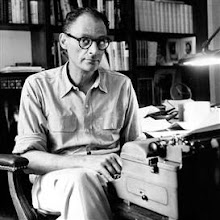
Billy Wilder

Billy Wilder (22 June 1906 – 27 March 2002) was an Austrian-American journalist, filmmaker, screenwriter and producer, whose career spanned more than 50 years and 60 films. He is regarded as one of the most brilliant and versatile filmmakers of Hollywood's golden age.
Born Samuel Wilder in Sucha Beskidzka, Austria-Hungary (now Poland) to Max Wilder and Eugenia Dittler, Wilder was nicknamed Billie by his mother, because she was fascinated with Billy the Kid when she had visited the United States in her younger days (he changed that to "Billy" after arriving in America). His parents had a successful and well-known cake shop in Sucha Beskidzka's train station and unsuccessfully tried to convince their son to inherit the business. Soon the family moved to Vienna, where Wilder attended school. After dropping out of the University of Vienna, Wilder became a journalist. To advance his career Wilder decided to move to Berlin, Germany.
While in Berlin, before achieving success as a writer, Wilder allegedly worked as a taxi dancer. After writing crime and sports stories as a stringer for local newspapers, he was eventually offered a regular job at a Berlin tabloid. Developing an interest in film, he began working as a screenwriter. He collaborated with several other tyros (with Fred Zinnemann and Robert Siodmak, on the 1929 feature, People on Sunday). After the rise of Adolf Hitler, Wilder, who was Jewish, left for Paris and then the United States. His mother, grandmother and stepfather were murdered at the Auschwitz concentration camp.

After arriving in Hollywood in 1933, Wilder continued his career as a screenwriter. He became a naturalized citizen of the United States in 1934. Wilder's first significant success was Ninotchka1939, in a collaboration with fellow German immigrant Ernst Lubitsch. This screwball comedy starred Greta Garbo (generally known as a tragic heroine in film melodramas), and was popularly and critically acclaimed. With the byline, "Garbo Laughs!", it also took Garbo's career in a new direction (although he and Brackett had already wrote Bluebeard's Eighth Wife and Midnight to great aclaim). The film also marked Wilder's first Academy Award nomination, which he shared with co-writer Charles Brackett. For twelve years Wilder co-wrote many of his films with Brackett, from 1938 through 1950. He followed Ninotchka with a series of box office hits in 1942, including his Hold Back the Dawn and Ball of Fire, as well as his directorial feature debut, The Major and the Minor.

Wilder established his directorial reputation after helming Double Indemnity (1944), a film noir he co-wrote with mystery novelist Raymond Chandler, with whom he did not get along. Double Indemnity not only set conventions for the noir genre (such as "venetian blind" lighting and voice-over narration), but was also a landmark in the battle against Hollywood censorship. The original James M. Cain novel Double Indemnity featured two love triangles and a murder plotted for insurance money. The book was highly popular with the reading public, but had been considered unfilmable under the Hays Code, because adultery was central to its plot. Double Indemnity is credited by some as the first true film noir, combining the stylistic elements of Citizen Kane with the narrative elements of The Maltese Falcon.

Two years later, Wilder earned the Best Director and Best Screenplay Academy Awards for the adaptation of a Charles R. Jackson story The Lost Weekend, the first major American film to make a serious examination of alcoholism, another difficult theme under the Production Code. In 1950, Wilder co-wrote and directed the dark and cynical and critically acclaimed Sunset Boulevard, which paired rising star William Holden with Gloria Swanson. Swanson played Norma Desmond, a reclusive silent film star who dreams of a comeback; Holden is an aspiring screenwriter who becomes a kept man.

In 1951, Wilder followed Sunset Boulevard with Ace in the Hole (a/k/a The Big Carnival), a tale of media exploitation of a caving accident. It was a critical and commercial failure at the time, but its reputation has grown over the years. In the fifties, Wilder also directed two vibrant adaptations of Broadway plays, the POW drama Stalag 17 (1953), which resulted in a Best Actor Oscar for William Holden, and the Agatha Christie mystery Witness for the Prosecution (1957).

From the mid-1950s on, Wilder made mostly comedies.[4] Among the classics Wilder created in this period are the farces The Seven Year Itch (1955) and Some Like It Hot (1959), satires such as The Apartment (1960), and the romantic comedy Sabrina (1954). Wilder's humor is sometimes sardonic. In Love in the Afternoon (1957), a young and innocent Audrey Hepburn who doesn't want to be young or innocent wins playboy Gary Cooper by pretending to be a married woman in search of extramarital amusement.

In 1959 Wilder introduced crossdressing to American film audiences with Some Like It Hot. In this comedy Jack Lemmon and Tony Curtis play musicians on the run from a Chicago gang, who disguise themselves as women and become romantically involved with Marilyn Monroe and Joe E. Brown.

In 1959, Wilder began to collaborate with writer-producer I.A.L. Diamond, an association that continued until the end of both men's careers. After winning three Academy Awards for 1960's The Apartment (for Best Picture, Director, and Screenplay), Wilder's career slowed. His Cold War farce One, Two, Three (1961) featured a rousing comic performance by James Cagney, but was followed by the lesser films Irma la Douce and Kiss Me, Stupid. Wilder garnered his last Oscar nomination for his screenplay The Fortune Cookie in 1966. His 1970 film The Private Life of Sherlock Holmes was intended as a major roadshow release, but was heavily cut by the studio and has never been fully restored. Later films such as Fedora and Buddy Buddy failed to impress critics or the public.

After that Wilder never ceased to complain that Hollywood was making a big mistake by not giving him any films to direct. He did so at film festivals, in interviews, on television, and whenever else he had the chance. He often hinted that he was being discriminated against, due to his age. His complaining didn't help: for whatever reason, Hollywood simply wouldn't hire him, and his directorial career ended.

One "consolation" which Wilder had in his later years, besides his art collection was the Andrew Lloyd Webber musical stage version of "Sunset Boulevard." The musical itself had an uneven success and is generally considered to be one of the least of Webber's musicals. However, the huge amount of money and energy thrown into the musical was definitely a tribute to Wilder's work.

Wilder's directorial choices reflected his belief in the primacy of writing. He avoided the exuberant cinematography of Alfred Hitchcock and Orson Welles because, in Wilder's opinion, shots that called attention to themselves would distract the audience from the story. Wilder's pictures have tight plotting and memorable dialogue. Despite his conservative directorial style, his subject matter often pushed the boundaries of mainstream entertainment.

Wilder was skilled at working with actors, coaxing silent era legends Gloria Swanson and Erich von Stroheim out of retirement for roles in Sunset Boulevard. For Stalag 17, Wilder squeezed an Oscar-winning performance out of a reluctant William Holden (Holden wanted to make his character more likeable; Wilder refused). Wilder sometimes cast against type for major parts such as Fred MacMurray in Double Indemnity and The Apartment. Many today know MacMurray as a wholesome family man from the television series My Three Sons, but he played a womanizing schemer in Wilder's films. Humphrey Bogart shed his tough guy image to give one of his warmest performances in Sabrina. James Cagney, not usually known for comedy, was memorable in a high-octane comic role for Wilder's One, Two, Three. Wilder coaxed a very effective, and in some ways memorable performance out of Marilyn Monroe in Some Like It Hot.

In total, he directed fourteen different actors in Oscar-nominated performances: Barbara Stanwyck, Ray Milland, William Holden, Gloria Swanson, Erich von Stroheim, Nancy Olson, Robert Strauss, Audrey Hepburn, Charles Laughton, Elsa Lanchester, Jack Lemmon, Jack Kruschen, Shirley MacLaine and Walter Matthau. Milland, Holden and Matthau won Oscars for their performances in Wilder films.

Wilder mentored Jack Lemmon and was the first director to pair him with Walter Matthau, in The Fortune Cookie (1966). Wilder had great respect for Lemmon, calling him the hardest working actor he had ever met. Lemmon starred in seven of Wilder's films.

Billy Wilder was recognized with the AFI LIfe Achievement Award in 1986.

In 1988, Wilder was awarded the Irving G. Thalberg Memorial Award. He has a star on the Hollywood Walk of Fame.

Wilder died in 2002 of pneumonia at the age of 95 after battling health problems, including cancer, in Los Angeles, California and was interred in the Westwood Village Memorial Park Cemetery in Westwood, Los Angeles, California next to Jack Lemmon. Marilyn Monroe's crypt is located nearby.

Wilder died the same day as two other comedy legends: Milton Berle and Dudley Moore. The next day, French top-ranking newspaper Le Monde titled its first-page obituary, "Billy Wilder is dead. Nobody is perfect." This was a reference to the famous closing line of his film Some Like it Hot spoken by Joe E. Brown after Jack Lemmon reveals he is not female.

Wilder holds a significant place in the history of Hollywood censorship for expanding the range of acceptable subject matter. He is responsible for two of the film noir era's most definitive films in Double Indemnity and Sunset Boulevard. Along with Woody Allen, he leads the list of films on the American Film Institute's list of 100 funniest American films with 5 films written and holds the honor of holding the top spot with Some Like it Hot. Also on the list are The Apartment and The Seven Year Itch which he directed, and Ball of Fire and Ninotchka which he co-wrote. The AFI has ranked four of Wilder's films among their top 100 American films of the 20th century: Sunset Boulevard (no. 12), Some Like It Hot (no. 14), Double Indemnity (no. 38) and The Apartment (no. 93).

Billy Wilder a hollywoodi aranykor vígjátékainak egyik kiemelkedő megteremtője, sajátos világot alkotott íróként és rendezőként. Érző szív és cinikus elme jellemezte. Világképét Matthau így foglalta össze: "A helyzet teljesen reménytelen, de nem súlyos". Mindig szimpátiát tudott kelteni alakjai iránt, lehettek azok alkoholisták, bűnözők, egykori sztárok vagy egyszerűen csak szerencsétlen kisemberek. A legtöbbet hozta ki sodró lendületű, pattanásig feszült jeleneteiből. Jelszava volt: sohasem untatni! És a legtöbbet hozta ki színészeiből. Sokakat ő juttatott a sztárság csillogó rivaldafényébe. Lubitsch volt a példaképe. Összeköti őket: a sztori kifogástalan felépítése, a remek időzítések és poénok, az emberszeretet és egy nagy adag szarkasztikus humor. Mindketten szívesen dolgoztak egyszerre több forgatókönyvíróval, sokra becsülték a dramaturgiához illeszkedő díszleteket, de mindenek felett a színészi egyéniségeket, akiknek karizmáját a celluloidszalag és a filmvászon csak még titokzatosabbá tette. Sok műfajú rendező volt. Akaratán kívül a film noir egyik megteremtője (Gyilkos vagyok, 1944). Legnagyobb vígjátéki és drámai sikereit az ötvenes-hatvanas években aratta: Alkony sugárút, Délutáni szerelem, A vád tanúja, Van, aki forrón szereti, A legénylakás. A hetvenes években népszerűsége visszaesett, "kiment a divatból". (1981-től már nem forgatott többet.) Végig megmaradt jelentős rendezőnek, aki akarva-akaratlan saját korát tükrözte. Így vallott önmagáról: "Szeretem a változatosságot. Amikor szomorú vagyok, vígjátékot csinálok, s amikor jó a kedvem, akkor súlyos drámát. Más is van az életemben, mint a film. És ha van valami, amit jobban utálok annál, hogy nem vesznek komolyan, akkor az az, ha túl komolyan vesznek." 96 évesen halt meg.

2009. szeptember 20., vasárnap

ROSH HASHANNAH

!5770!

Shana Tova

Happy New Year

Boldog Új Évet


KosherPower Organization

- all Jew need to know -


2009. szeptember 13., vasárnap

Isaac Merritt Singer and his famous Machine

Isaac Merritt Singer was born in the hamlet of Johnsonville, in the town of Pittstown, Rensselaer County, NY, on 27 October 1811. He was the youngest son of Adam SINGER and his first wife, Ruth BENSON. Adam SINGER is said to have been a German immigrant from Saxony whose birth name was Adam REISINGER. One German source says that Reisinger was a Jewish family. It is not known how many children Adam Singer and Ruth Benson had, but there were at least two sons and a daughter; the daughter's name was Elizabeth.

Isaac was married for the first time in 1830, to Catharine Maria Haley. Then, they moved to New York City, probably in 1831. They seem to have lived there with her parents for a time. By the summer of 1833 they had again moved, this time to Otsego County, New York. Isaac had worked in his older brother's machine shop before marriage and learnt the machinists trade there; in Otsego in the village of Fly Creek Isaac was again working in a machine shop, this time owned by George Pomeroy.

Isaac had two children by Catharine: William, born in 1834, and Lillian, born in 1837. In 1835 he moved with Catherine and their young son William to New York City, working in a press shop. In 1836, he left the city as an agent for a company of players, touring through Baltimore, where he met Mary Ann Sponsler, to whom he proposed marriage. He returned with Mary Ann to New York in 1837. That year Isaac had two children born: his wife Catherine gave him Lillian, and Mary Ann gave him a son. His domestic life with Catharine did not prosper after this, but they were not officially divorced until 1860.

After Mary Ann arrived in New York and found out that Singer was already married, she and Singer returned to Baltimore, presenting themselves as a married couple.

By 1850, when Singer saw his first sewing machine, it had been "invented" four times. All sewing machines before Walter Hunt's produced a chain stitch, which had the disadvantage of easily unravelling. Hunt's machine produced a lock stitch, as did all subsequent machines including Lerow and Blodgett's, which Singer in turn improved in Phelps's shop. Elias Howe independently developed a sewing machine and obtained a patent on September 10, 1846.

War broke out between Howe and Singer, with each claiming patent primacy. Singer set out to discover that Howe's improvements had been reinventions of existing technology, and found one of Hunt's old machines, which indeed created a lock-stitch with a shuttle. Hunt applied in 1853 for a patent, claiming priority to Howe's patent, issued some seven years earlier. A lawsuit, Hunt v. Howe, came to trial in 1854, and was resolved in Howe's favor. Howe then brought suit to stop Singer from selling Singer machines, and protracted litigation ensued.

In 1856, manufacturers Grover, Baker, Singer, Wheeler, and Wilson, all accusing the others of patent infringement, met in Albany, New York to pursue their suits. Orlando B. Potter, a lawyer and president of the Grover and Baker Company, proposed that, rather than sue their profits out of existence, they pool their patents. This was the first patent pool, a process which enables production of complicated machines without legal battles over patent rights. They agreed to form the Sewing Machine Combination, but for this to be of any use they had to secure the cooperation of Elias Howe, who still held certain vital uncontested patents which meant he received a royalty on every sewing machine manufactured by any company. Terms were arranged, and Howe joined on. Sewing machines began to be mass produced: I. M. Singer & Co manufactured 2,564 machines in 1856, and 13,000 in 1860 at a new shop on Mott Street in New York.

Sewing machines had until now been industrial machines, made for tailors, but smaller machines began to be marketed for home use. I. M. Singer expanded into the European market, establishing a factory in Clydebank, near Glasgow, controlled by the parent company, becoming one of the first American-based multinational corporations, with agencies in Paris and Rio de Janeiro.

The financial success gave Singer the ability to buy a mansion on Fifth Avenue, into which he moved his second family. In 1860, he divorced Catherine, on the basis of her adultery with Stephen Kent. He continued to live with Mary Ann, until she spotted him driving down Fifth Avenue seated beside one Mary McGonigal, an employee, about whom Mary Ann had well-founded suspicions, for by this time Mary McGonigal had borne Isaac Singer five children. The surname Matthews was used for this family. Mary Ann (still calling herself Mrs. I. M. Singer) had her husband arrested for bigamy. Singer was let out on bond and, disgraced, fled to London in 1862, taking Mary McGonigal with him. In the aftermath, another of Isaac's families was discovered: he had a "wife" Mary Eastwood Walters and daughter Alice Eastwood in Lower Manhattan, who both adopted the surname "Merritt". By 1860, Isaac had fathered and recognized eighteen children (sixteen of them remaining alive), by four women.

In 1863, I. M. Singer & Co. was dissolved by mutual consent, with the business continued as "The Singer Manufacturing Company," enabling the reorganization of financial and management responsibilities. Singer no longer actively participated in the firm's day-to-day management, but served as a member of the Board of Trustees (even though he now lived in Europe) and was a major stockholder.

He now began to increase his new family: he would eventually have six children with his wife Isabella. Unable, probably because of Isaac's chequered marital past, to enter New York society, the family emigrated to Paris, never to return to the United States. Fleeing the Franco-Prussian War, they resided first in London, then in Paignton, (near Torquay) on the Devon coast where he built a large house, Oldway Mansion. He brought some of his other children to live there. Nine days after the wedding of his daughter Alice Merritt to William Alonso Paul La Grove, Isaac Singer died of "an affection of the heart and inflammation of the wind-pipe." He was interred in Torquay cemetery.

Singer left an, leaving some out for various reasons. Suits followed, with Mary Anne claiming to be the legitimate "Mrs. Singer". In the end Isabella was declared the legal widow. Isabella remarried in 1879 with Dutch musician Victor Reubsaet and settled in Paris. After his death in 1887, she remarried in 1891 with Paul Sohège.

Isaac's 18th child Winnaretta Singer married Prince Louis de Scey-Montbéliard in 1887, when she was 22. After annulment of this marriage in 1891, she married Prince Edmond de Polignac in 1893. She would become a prominent patron of French avant-garde music, e.g., Erik Satie composed his Socrate as one of her commissions (1918). As a lesbian she became involved with Violet Trefusis from 1923 on. Another of Isaac's daughters, Isabelle-Blanche (born 1869) married Jean, duc Decazes (Daisy Fellowes was their daughter). Isabelle committed suicide in 1896. A brother to Winnaretta and Isabelle, Paris Singer, had a child by Isadora Duncan. Another brother, Washington Singer, became a substantial donor to the University College of the southwest of England, which later became the University of Exeter; one of the university's buildings is named in his honour.

Isaac M. Singer 1811-ben született az amerikai Pittstownban, a varrógép legsikeresebb fejlesztője.
Singer színésznek ugyan nem volt kiemelkedő tehetség, viszont félelmetes érzéke volt mindenféle műszaki dologhoz. Sok találmánya és sok szabadalma volt, de a balszerencse is üldözte, így negyven éves koráig csak tengődött. 1851-ben azonban egy elromlott varrógép javításával bízták meg, ő pedig Howe masinája alapján 11 nap alatt kifejlesztett egy sokkal hatékonyabb, folyamatos varrásra is alkalmas eszközt. A szabadalom miatt hosszú éveken át pereskedett Howe-val, viszont a procedúrának köszönhetően találkozott az ügyvéd Edward Clarkkal, akit felvett cégéhez. A családcentrikus, becsületes Clark tökéletes ellentéte volt a bohém, csapodár Singernek. Magánemberként nem jöttek ki jól, de üzletileg remekül kiegészítették egymást. Clark reklámkampányainak és üzleti érzékének köszönhetően 1865-re a vállalatnak 29 országban voltak gyárai, Singer tehetségéből pedig 20 szabadalmaztatott találmányra futotta. Nagyjából 15 millió dolláros vagyonát halála után 23 gyermeke között osztották fel.

2009. augusztus 17., hétfő

Faludy György

György Faludy (September 22, 1910, Budapest - September 1, 2006, Budapest), sometimes anglicized as George Faludy, was a Hungarian-Jewish poet, writer and translator.
Faludy's translations of the ballads of François Villon, and even more prominent rewritings (as he admitted several times), brought him huge popularity on their initial publication in 1934, and have been since published about forty times. He could have hardly expressed these ideas in any other way in his time. He wrote several volumes of poetry as well, some of which were published in English. – His other outstanding success was My Happy Days in Hell (Pokolbéli víg napjaim), an autobiographical novel first published in 1962 in English translation, which was translated to French and German as well, but did not appear in the original Hungarian until much later.

Faludy completed his schooling in the Fasori Evangélikus Gimnázium and studied at the Universities of Vienna, Berlin and Graz. During these times he developed radical liberalist views, which he maintained till the very last days of his life.

In 1938, he left Hungary for Paris, and then for the U.S. During World War II, he served in the American forces. He arrived back in Hungary in 1946. In April 1947 he was among a group that destroyed a Budapest statue of Ottokár Prohászka, a Hungarian bishop who is respected by many but who is often considered antisemitic. [1] He only admitted his participation forty years later.

In 1949 he was condemned with fictitious accusations and was sent to the labor camp of Recsk for three years. During this time, he lectured other prisoners in literature, history and philosophy. After his release he made his living by translation. In 1956 (after the Revolution) he escaped again to the West. He settled in London, and was the editor of a Hungarian literary journal.

It was during his stay in London that Faludy wrote the novel, which was soon translated to English, by which he is still best known outside Hungary: My Happy Days in Hell. (It was only published in his native tongue in 1987, and since then in several further editions.) He moved to Toronto in 1967 and lived there for twenty years. He gave lectures in Canada and the U.S. and was the editor of Hungarian literary journals. In 1976, he received a Canadian citizenship and two years later was elected as an honorary doctor of the University of Toronto where he regularly taught. His poems were published in New York in 1980 (see below with the other collections).

In 1988 Faludy returned to Hungary. After the change of regime, his works, which were forbidden, confiscated, destroyed and distributed as samizdat during the Communist period, were at last published in Hungary. New collections of poems appeared in the 1990s, and several translations. In 1994 he received the most prestigious award in Hungary, the Kossuth Prize. In 2000 he published the sequel of My Happy Days in Hell: "After My Days in Hell" in Hungarian (no data available about any English translation), about his life after the labour camp. In the years preceding his death, Faludy was considered not only as a poet, a writer and a translator but as a living legend as well in Hungary.Renowned for his anecdotes as well as his writing, he was a celebrated wit whose life story attracted the attentions of many a foreign author. Besides the many European based authors who visited Faludy, there was the Canadian author George Jonas who penned Munich as well as the columnist and playwright Rory Winston, and Finnish author [H.M. Marttila].

Faludy's second wife, Zsuzsa Szegő, died in the 1960s. They had a son, Andrew. In 1963 Eric Johnson (1937-2004), a US ballet dancer and later a renowned poet in contemporary Latin poetry, read the novel My Happy Days in Hell, which captivated him, and he decided to seek Faludy in Hungary. He started to learn Hungarian and found Faludy three years later in Malta. He became his secretary, translator, co-author and partner for the next 36 years. In 2002, Faludy married a 26 year old poet, Fanny Kovács.[1] Johnson left for Kathmandu, Nepal, and died there in February 2004. Faludy published poems written jointly with his wife.

By 2006, a memorial park will be built in his honor designed by the architect Scott Torrence, facing his former apartment. It was initiated by the Toronto Heritage Project to commemorate the outstanding cultural figures of the city. A bronze plaque will be placed in the park with his portrait, made by the Hungarian-born sculptor Dora de Pedery-Hunt. His poem Michelangelo's Last Prayer, chosen by the poet, will be carved on the plaque in English and in Hungarian.

Faludy György (Budapest, 1910. szeptember 22.Budapest, 2006. szeptember 1.) magyar költő, műfordító, író.

Budapesten született zsidó polgári családban. Édesapja Faludy Jenő, vegyész, édesanyja Bieringer Erzsébet Katalin volt. 1928-ban érettségizett a fasori Evangélikus Főgimnáziumban. Ezután a bécsi (1928-1930), a berlini (1930-1931), a párizsi (1932), és a grazi (1932-1933) egyetemen tanult. 1933-1934-ben katonai szolgálatot teljesített zászlósi rendfokozatban, amelytől később megfosztották. 1937-ben jelentette meg a Villon-átköltéseket, mely jó időre meg is határozta pályáját.

1938-ban elhagyta Magyarországot, erre többek között az kényszerítette, hogy úgy érezte hazájának az a legrosszabb, ha a háborút a hitleri Németország nyeri meg, igy a németek oldalán semmiképp sem akart volna harcolni. Párizsig menekült, itt találkozott többek között Koestler Artúrral és az emigráns magyar művészek közösségével. Később a német megszállás miatt innen is távozni kényszerült. Marokkón keresztül az Amerikai Egyesült Államokba jutott, ahol a Szabad Magyar Mozgalom titkáraként és lapszerkesztőjeként tevékenykedett, majd három évig az amerikai hadseregben szolgált tisztként. Eközben húga az országban maradt, nem élte túl az ostromot.

1946-ban tért haza, a Népszavánál helyezkedett el. 1947-ben megjelent az Őszi harmat után című verseskötete, illetve a Villon balladák már a 14. kiadásnál tartottak. Noha baloldali érzelmű maradt (vezetésével döntötték le kommunista munkások 1947. április 26-áról 27-re virradó éjjel Prohászka Ottokár Károlyi-kertbéli szobrát), a kommunista hatalom is ellenségesen viszonyult hozzá, további művei nem jelenhettek meg. 1949-ben hamis vádak alapján 3 évre a recski kényszermunkatáborba zárták. Az itt írt versei 1983-ban Münchenben jelenhettek meg Börtönversek 1949–1953 címmel. Szabadulása után fordításokkal kereste meg a kenyérre valót, majd 1956-ban ismét elhagyta az országot.

Londonban települt le, ahol 1957-től az Irodalmi Újság szerkesztője. 1961-1962-ben írta a Pokolbéli víg napjaim című önéletrajzi visszaemlékezéseit, amely azonban először angol fordításban jelent meg 1962-ben. A könyv 1987-ben jelent meg először Magyarországon az AB Független Kiadónál – a kommunista cenzúra által betiltott, szamizdat kötetként. 1963 és 1967 között Firenzében és Máltán élt. 1967-ben költözött át Torontóba. Kanadában és az Egyesült Államokban különböző egyetemeken tartott előadást, miközben a Ötágú síp és a Magyarok Világlapja című lapok munkatársaként dolgozott. 1980-ban New Yorkban jelentek meg összegyűjtött versei. Közben Magyarországon tiltott költő volt, a könyvtárakban még a katalógusból is kiszedték azokat a cédulákat, melyen a neve szerepelt.

1988-ban másodszor is hazatelepült. A rendszerváltás után korábban szamizdatban terjedő műveit is ki lehetett adni. Új verskötetei és fordításai is megjelentek. Faludy 1994-ben a Kossuth-díjat is megkapta. 1998-ban alapító tagja volt a Digitális Irodalmi Akadémiának. Személyét többnyire érdeklődés övezte, bár 90 éves kora felett sem szűnt meg polgárpukkasztónak, meghökkentőnek lenni. Pokol tornácán című kötetének bemutatóját már nem érhette meg, a Kossuth-díjas költőt 2006. szeptember 1-jén, otthonában érte a halál.

Tiszteletére 2006. október 3-án, Torontóban, a közvetlenül az egykori ottani otthona melletti parkot hivatalosan is George Faludy Place-re keresztelték át. Bár az elnevezési procedúra még életében elkezdődött, a névadási ünnepségre időközben bekövetkezett halála miatt már nem tudott elutazni.

Díjak és kitüntetések:

  • A Magyar Köztársaság rubinokkal ékesített Zászlórendje, 1991.
  • A Soros Alapítvány Életműdíja, 1993.
  • Nagy Imre-emlékplakett, 1993.
  • Budapest Főváros Díszpolgára, 1993.
  • Kossuth-díj, 1994.
  • A MÚOSZ örökös tagja, 1997.
  • Pulitzer-emlékdíj, 1998.
  • Aranytoll, 2000.
  • Don Quijote-díj, 2001.
  • Obersovszky emlékplakett, 2002.
  • Gundel Művészeti-díj, 2002.
  • A Magyar Köztársaság Érdemrend Középkeresztje a Csillaggal, 2002.
  • A Magyar Köztársaság Érdemrend Nagykeresztje 2006.
PageRank Kereső optimalizálás
 
PageRank Kereső optimalizálás