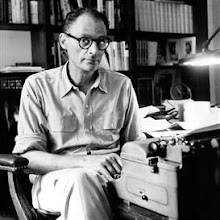
Sir Karl Raimund Popper (July 28, 1902 – September 17, 1994) was an Austrian and British[1] philosopher and a professor at the London School of Economics. He is counted among the most influential philosophers of science of the 20th century, and also wrote extensively on social and political philosophy. Popper is known for repudiating the classical observationalist/inductivist account of scientific method by advancing empirical falsification instead; for his opposition to the classical justificationist account of knowledge which he replaced with critical rationalism, "the first non justificational philosophy of criticism in the history of philosophy"[2] and for his vigorous defense of liberal democracy and the principles of social criticism which he took to make the flourishing of the "open society" possible.
Karl Popper was born in Vienna (then in Austria-Hungary) in 1902 to middle-class parents of Jewish origins, both of whom had converted to Christianity.[3] Popper received a Lutheran upbringing and was educated at the University of Vienna.[3]. His father was a bibliophile who had 12,000-14,000 volumes in his personal library.[4] Popper inherited from him both the library and the disposition.[5]
In 1919 he became attracted by Marxism and subsequently joined the Association of Socialist School Students and also became a member of the Social Democratic Party of Austria, which was at that time a party that fully adopted the marxist ideology.[6] He soon became disillusioned by the philosophical restraints imposed by the historical materialism of Marx, abandoned the ideology and remained a passive supporter of social liberalism throughout his life.
In 1928 he earned a PhD in Psychology and taught secondary school from 1930 to 1936. He published his first book, Logik der Forschung (The Logic of Scientific Discovery), in 1934. Here, he criticised psychologism, naturalism, inductionism, and logical positivism, and put forth his theory of potential falsifiability as the criterion demarcating science from non-science.
In 1937, the rise of Nazism and the threat of the Anschluss led Popper to emigrate to New Zealand, where he became lecturer in philosophy at Canterbury University College New Zealand (at Christchurch). In 1946, he moved to England to become reader in logic and scientific method at the London School of Economics, where he was appointed professor in 1949. He was president of the Aristotelian Society from 1958 to 1959. He was knighted by Queen Elizabeth II in 1965, and was elected a Fellow of the Royal Society in 1976. He retired from academic life in 1969, though he remained intellectually active for the rest of his life. He was invested with the Insignia of a Companion of Honour in 1982. Popper was a member of the Academy of Humanism and described himself as an agnostic, showing respect for the moral teachings of Judaism and Christianity.
Popper won many awards and honours in his field, including the Lippincott Award of the American Political Science Association, the Sonning Prize, and fellowships in the Royal Society, British Academy, London School of Economics, King's College London, and Darwin College Cambridge. Austria awarded him the Grand Decoration of Honour in Gold. He died in 1994. After cremation, Popper's ashes were taken to Vienna and buried at Lainz cemetery adjacent to the ORF Centre, where his wife Josefine Anna Henninger - who had died in Austria several years before - had already been buried.
Popper coined the term critical rationalism to describe his philosophy. The term indicates his rejection of classical empiricism, and of the observationalist-inductivist account of science that had grown out of it. Popper argued strongly against the latter, holding that scientific theories are abstract in nature, and can be tested only indirectly, by reference to their implications. He also held that scientific theory, and human knowledge generally, is irreducibly conjectural or hypothetical, and is generated by the creative imagination in order to solve problems that have arisen in specific historico-cultural settings. Logically, no number of positive outcomes at the level of experimental testing can confirm a scientific theory, but a single counterexample is logically decisive: it shows the theory, from which the implication is derived, to be false. Popper's account of the logical asymmetry between verification and falsifiability lies at the heart of his philosophy of science. It also inspired him to take falsifiability as his criterion of demarcation between what is and is not genuinely scientific: a theory should be considered scientific if and only if it is falsifiable. This led him to attack the claims of both psychoanalysis and contemporary Marxism to scientific status, on the basis that the theories enshrined by them are not falsifiable. Popper also wrote extensively against the famous Copenhagen interpretation of quantum mechanics. He strongly disagreed with Niels Bohr's instrumentalism and supported Albert Einstein's realist approach to scientific theories about the universe. Popper's falsifiability resembles Charles Peirce's fallibilism. In Of Clocks and Clouds (1966), Popper remarked that he wished he had known of Peirce's work earlier.
In The Open Society and Its Enemies and The Poverty of Historicism, Popper developed a critique of historicism and a defence of the 'Open Society'. Historicism is the theory that history develops inexorably and necessarily according to knowable general laws towards a determinate end. Popper argued that this view is the principal theoretical presupposition underpinning most forms of authoritarianism and totalitarianism. He argued that historicism is founded upon mistaken assumptions regarding the nature of scientific law and prediction. Since the growth of human knowledge is a causal factor in the evolution of human history, and since "no society can predict, scientifically, its own future states of knowledge", it follows, he argued, that there can be no predictive science of human history. For Popper, metaphysical and historical indeterminism go hand in hand.
Among his contributions to philosophy is his attempt to answer the philosophical problem of induction. The problem, in basic terms, can be understood by example: given that the sun has risen every day for as long as anyone can remember, what is the rational proof that it will rise tomorrow? How can one rationally prove that past events will continue to repeat in the future, just because they have repeated in the past? Popper's reply is characteristic, and ties in with his criterion of falsifiability. He states that while there is no way to prove that the sun will rise, we can formulate a theory that every day the sun will rise—if it does not rise on some particular day, our theory will be disproved, but at present it is confirmed. Since it is a very well-tested theory, we have every right to believe that it accurately represents reality, so far as we know.
This may be a true description of the pragmatic approach to knowledge adopted by the scientific method, but it does not in itself address the philosophical problem. As Stephen Hawking explains, "No matter how many times the results of experiments agree with some theory, you can never be sure that the next time the result will not contradict the theory."[8] It may be pragmatically useful to accept a well-tested theory as true until it is falsified, but this does not solve the philosophical problem of induction. As Bertrand Russell put it, "the general principles of science . . . are believed because mankind have found innumerable instances of their truth and no instances of their falsehood. But this affords no evidence for their truth in the future, unless the inductive principle is assumed."[9] In essence, Popper addressed justification for belief ("why do you believe") that the sun will rise tomorrow, not justification for the fact ("how do you know") that it will, which is the crux of the philosophical problem. Said another way, Popper addressed the psychological causes of our belief in the validity of induction without trying to provide logical reasons for it. In this way, he provided a psychological account of the use of induction, but left the philosophical ground of induction as a valid mode of knowledge unaccounted for.
This may be a true description of the pragmatic approach to knowledge adopted by the scientific method, but it does not in itself address the philosophical problem. As Stephen Hawking explains, "No matter how many times the results of experiments agree with some theory, you can never be sure that the next time the result will not contradict the theory."[8] It may be pragmatically useful to accept a well-tested theory as true until it is falsified, but this does not solve the philosophical problem of induction. As Bertrand Russell put it, "the general principles of science . . . are believed because mankind have found innumerable instances of their truth and no instances of their falsehood. But this affords no evidence for their truth in the future, unless the inductive principle is assumed."[9] In essence, Popper addressed justification for belief ("why do you believe") that the sun will rise tomorrow, not justification for the fact ("how do you know") that it will, which is the crux of the philosophical problem. Said another way, Popper addressed the psychological causes of our belief in the validity of induction without trying to provide logical reasons for it. In this way, he provided a psychological account of the use of induction, but left the philosophical ground of induction as a valid mode of knowledge unaccounted for.
By all accounts, Popper has played a vital role in establishing the philosophy of science as a vigorous, autonomous discipline within analytic philosophy, through his own prolific and influential works, and also through his influence on his own contemporaries and students. Popper founded in 1946 the Department of Philosophy, Logic and Scientific Method at the London School of Economics and there lectured and influenced both Imre Lakatos and Paul Feyerabend, two of the foremost philosophers of science in the next generation of philosophy of science. (Lakatos significantly modified Popper's position, and Feyerabend repudiated it entirely, but the work of both is deeply influenced by Popper and engaged with many of the problems that Popper set.)
While there is some dispute as to the matter of influence, Popper had a long-standing and close friendship with economist Friedrich Hayek, who was also brought to the London School of Economics from Vienna. Each found support and similarities in each other's work, citing each other often, though not without qualification. In a letter to Hayek in 1944, Popper stated, "I think I have learnt more from you than from any other living thinker, except perhaps Alfred Tarski." (See Hacohen, 2000). Popper dedicated his Conjectures and Refutations to Hayek. For his part, Hayek dedicated a collection of papers, Studies in Philosophy, Politics, and Economics, to Popper, and in 1982 said, "...ever since his Logik der Forschung first came out in 1934, I have been a complete adherent to his general theory of methodology." (See Weimer and Palermo, 1982).
Popper also had long and mutually influential friendships with art historian Ernst Gombrich, biologist Peter Medawar, and neuro-scientist John Carew Eccles.
Popper's influence, both through his work in philosophy of science and through his political philosophy, has also extended beyond the academy. Among Popper's students and advocates at the London School of Economics is the multibillionaire investor George Soros, who says his investment strategies are modelled on Popper's understanding of the advancement of knowledge through falsification. Among Soros's philanthropic foundations is the Open Society Institute, a think-tank named in honour of Popper's The Open Society and Its Enemies, which Soros founded to advance the Popperian defense of the open society against authoritarianism and totalitarianism.
Popperian philosophy also inspired the creation of Taking Children Seriously, a movement arguing that children and adults should try to resolve their differences without coercion.
 Karl Raimund Popper osztrák filozófus. Fő eredményeket a tudományfilozófia, episztemológia és politika-filozófia területén ért el.
A 20. század legbefolyásosabb filozófusainak egyike. A legismertebb a tudomány induktivista felfogásának kritikájáért, és e helyett a cáfolást (falszifikáció) tette meg a tudományokat és áltudományokat elválasztó kritériumnak (demarkáció). A politika-filozófia területén a liberális demokrácia a nyílt társadalom híve, és a kommunizmus bizonyos mértékű bírálója.
Bécsben született, az akkori Osztrák-Magyar Monarchiában, 1902-ben, középosztálybeli, zsidó származású családban.Popper a Bécsi Egyetemen tanult. FIlozófiából 1928-ban doktorit végzett és egy gimnáziumban tanított 1930-tól 1936-ig. 1937-ben a náci uralom elől Új-Zélandba emigrált, ahol a Canterbury Egyetemen filozófiát tanított Christchurchben. 1946-ban Angliába költözött. A a logika és tudományfilozófia professzora lett a London School of Economics-ban, 1949-ben. II. Erzsébet brit királynő 1969-ben lovaggá ütötte érdemeiért. 1969-ben nyugalmazták az akadémiai életből, bár 1994-ben bekövetkezett haláláig aktív maradt.
Popper alkotta meg a kritikai racionalizmus fogalmát, hogy filozófiáját leírja. Ez a megnevezés fontos, és jelzi a klasszikus empirizmus elutasítását, és a tudomány megfigyelés-induktivista szemléletét, amely ebből alakult ki. Popper az utóbbi ellen erősen érvelt, azt tartván, hogy a tudományos elméletek univerzálisak, és csak közvetve, az elméletek következményei alapján tesztelhetőek. Véleménye szerint a tudományos tudás általában nem redukálható egy megadott bázisra. Jellemzően inkább egy kreatív folyamattal hozzuk létre a hipotéziseket, hogy bizonyos már felmerült problémákat oldjunk meg velük, nem pedig induktív módon bizonyos megfigyelésekből általánosítva. Logikai szempontból, és precízebben fogalmazva: egy tudományos elméletet, mivel univerzális állításokból áll, véges pozitvív megfigyelés konfirmálhat, de nem bizonyíthat (ld. verifikáció). Ugyanakkor az igazolás és cáfolás nem szimmetrikus: egyetlen ellentmondó megfigyelés viszont cáfolhat egy elméletet (később ezt az állítást Lakatos Imre kritikájára finomította). Ennek megfelelően a cáfolhatóságot tette meg a demarkációs kritériumnak a tudományosságot illetően: azaz egy tudományos elméletet egy áltudományos elgondolástól az különböztet meg, hogy az előbbi előre meghatározott módon cáfolható (meg lehet mondani azon eseményeket, amelyek ha bekövetkeznek, akkor elvetjük az elméletet; megjegyzendő, hogy maga a popperi demarkáció - épp Popper kritériumai alapján - sem tudományos elmélet, hanem a tudományra vonatkozó, aligha cáfolható, ám nem is igazolható vélemény). Ehhez kapcsolódik Popper un. döntő kísérlet fogalma, amelyet elvégezve, két rivális elmélet között választani lehet, mivel az egyik szükségszerűen cáfolódik.
Popper élesen elkülönítette filozófiáját az analitikus filozófia korabeli fő áramlatától, a logikai empirizmustól. Az eddig felsorolt különbségek mellett abban látta a különbséget, hogy a nyelvi elemzést eleve jelentéktelennek és értelmetlennek tartotta. A filozófiának szerinte nem nyelvi elemzéssel kell foglalkoznia, mert az "igazi" filozófiai problémák nem abban vannak.
Ezen demarkációs kritériumának szellemében Popper kritizálta a freudi pszichoanalízist és a kora marxizmusát, azzal, hogy azok nem tudományosak, mivel nem cáfolhatóak. A tudományfilozófiai elképzeléseire döntő befolyással volt Albert Einstein munkássága, pontosabban a relativitáselmélet, amelyet mint a tudományos elméletalkotás és fejlődés mintájának tekintett. Popper falszifikácionizmusa emlékeztet Charles Pierce fallibizmusára az Of Clocks and Clouds (1966) című munkában, Popper azt mondta, jó lett volna, ha ismeri ezt a munkát korábban (Popper eléső könyve a fallszifikácionizmusra korábbi, ld. Popper, 1934).
A nyitott társadalom és ellenségei (The Open Society and Its Enemies) és a A historicizmus nyomorúsága (The Poverty of Historicism) című könyvekben Popper a historicizmust vette kritika alá és a „nyitott társadalmat” (kb. liberális demokrácia) védelmezte. A historicizmus szerint a történelem bizonyos ismert törvények alapján elkerülhetetlenül egy bizonyos végpont felé halad (például marxizmus). Popper a mellett érvel többek között, hogy az ilyen ideológia az autokratikus és totalitáriánus rendszerek technikai eszköze. Véleménye szerint a historicizmus a tudományos törvények természetének és a jóslás fogalmának félreértésén alapul. Mivel a tudományos tudás az emberi történelem fontos okozati faktorai közé számít, és mivel senki nem tudja megjósolni a jövő tudományos tudását, ezért nem létezhet a történelmet megjósló tudomány.
Popper eredményei közé való válasza David Hume indukciós problémájára. Hume azt állította, hogy csak mert a nap minden reggel felkelt eddig, ez nem jelenti, hogy emiatt van bármi racionális okunk azt hinni, hogy holnap is fel fog kelni. Nincs racionális módja annak, hogy egy minta a jövőben folytatódni fog, az alapján, hogy eddig megvolt.
Popper válasza a falszifikációs elvével harmonizál. Azt mondja, hogy ugyan semmilyen bizonyítás nincs arra, hogy a nap fel fog kelni, de elméletben feltehetjük. Ha nem kel fel, akkor cáfolódott az elmélet. De amíg felkel, addig az elmélet nincs cáfolva, és így elfogadható. Így Popper válasza a demarkációra válasz egy régi logikai problémára is.
Egyértelmű, hogy Popper jelentős szerepet játszott a tudományfilozófia – mint önálló filozófiai diszciplína – megalapításában, mind befolyásos műveivel, mind pedig diákjai körében, melyek közül többen híres filozófusok lettek, legfőképpen Lakatos Imre és Paul Feyerabend. Ez utóbbiak a következő nemzedék legjelentősebb filozófusai közé tartoznak a tudományfilozófiában. Lakatos munkájában jelentősen továbbfejlesztette a popperi elképzelést, Feyerabend pedig egyenesen ellene szegült, de mindkettő munkája Popper életművén alapul. Poppert széles körben a logikai pozitivizmus elleni forradalom fő alakjaként ismerik el (már akik nem sorolják be felületes vagy meggondolt módon pont a logikai pozitivizmus irányzatához). Felújította David Hume szkepticizmusát az indukció ellenében, és a falszifikáció elvének bevezetésével mind a logikai pozitivizmus kritikájában, mind pedig alternatívák nyújtásában szerepet játszott. Popper, szerénytelen módon visszaemlékezéseiben egy teljes fejezetet címez meg eképpen: „Ki ölte meg a Logikai Pozitivizmust?”, amelyet úgy válaszolt meg, hogy: „'Attól félek', hogy el kell ismerjem 'felelősségem'.” Popper ezzel eltúlozta szerepét, és lebecsülte mások, például Willard Orman Van Quine szerepét.
Popper befolyása, mind a tudományfilozófiai, mind a politikai téren túlment az akadémiai szférán. Popper tanítványai és támogatottjai közé tartozik a multimilliomos Soros György, aki szerint a befektetési stratégiája Popper modelljén alapul, amely a tudás növekedéséről, és a falszifikációról szól. Soros alapítványai közé tartozik az Open Society Institute (Nyitott Társadalom Intézet), egy think-tank, amelyet Popper A nyitott társadalom és ellenségei könyve alapján neveztek el. Ezt az intézetet Soros a popperi nyílt társadalom eszméjének támogatására, és az abszolutisztikus és totalitáriánus eszmék ellenében alapította.
Popper befolyása, mind a tudományfilozófiai, mind a politikai téren túlment az akadémiai szférán. Popper tanítványai és támogatottjai közé tartozik a multimilliomos Soros György, aki szerint a befektetési stratégiája Popper modelljén alapul, amely a tudás növekedéséről, és a falszifikációról szól. Soros alapítványai közé tartozik az Open Society Institute (Nyitott Társadalom Intézet), egy think-tank, amelyet Popper A nyitott társadalom és ellenségei könyve alapján neveztek el. Ezt az intézetet Soros a popperi nyílt társadalom eszméjének támogatására, és az abszolutisztikus és totalitáriánus eszmék ellenében alapította.
A Quine-Duhem tézis azt állítja, hogy nem lehet önmagában ellenőrizni egy hipotézist, hiszen mindegyik elméletek szövevényének részeként jelenik meg. Így csak annyit monthatunk, hogy összefüggő elméletek egész rendszere együttesen falszifikálódott, de nem lehet perdöntő módon megállapítani, hogy a rendszer melyik elemét kell kicserélni. Jó példája ennek a Neptunusz felfedezése: amikor az Uránusz mozgása nem egyezett a newtoni törvényekből következő predikcióknak, a "Naprendszernek hét bolygója van" elméletet vetették el, és nem Newton törvenyeit. Popper kitért erre a kritikára a The Logic of Scientific Discovery című 3. és 4. fejezetében. Popper szerint az elméletek elfogadása vagy elvetése egyfajta természetes szelekcióval történik. Olyan elméleteket, amik többet mondanak a világ működéséről, előnyben kell részesítenünk azokkal szemben, amelyek kevesebbet; minél általánosabban érvényes egy elmélet, annál "értékesebb". Ily módon Newton törvényei, széleskörű általános alkalmazhatóságuk folytán előnyben részesítendők a sokkal specifikusabb "A naprendszernek hét bolygója van" elméletnél.
Thomas Kuhn nagyhatású The Structure of Scientific Revolutions című könyvében úgy vélekedett, hogy a tudósok paradigmák sorozatában dolgoznak, és nem sok bizonyítékot talált arra, hogy a tudósok falszifikacionista módszertant követnének. Popper tanítványa, Lakatos Imre megpróbálta összeegyeztetni Kuhn munkáját a falszifikácionizmussal azt állítva, hogy a tudomány valójában kutatási programok falszifikációja által fejlődik, szemben a naív falszifikácionizmus egyetemes állításaival. Popper egy másik tanítványa, Paul Feyerabend végül elvetett mindenféle preskriptív methodológiát, mondván, hogy az egyetlen általános metódus, ami a tudományos haladást jellemzi az az anything goes (kb. bármit lehet, bármi megfelel).
Popper anti-historicista szillogizmusával kapcsolatban Szmodis megjegyzi, igaz ugyan, hogy az emberi tudás fejlődése és gyarapodása nem prognosztizálható, azonban az a premissza már meglehetősen kétséges, hogy a történelmet (különösen a nagy társadalmi alakulatok sorsát) az emberi tudás gyarapodása határozná meg döntő módon. (A tudattalan beidegződések és egyéb, kevéssé a tudással összefüggő tényezők hatalmát ugyanis épp a XX. század második felében tették világossá például a szociálpszichológia eredményei is.) Ebből következően igencsak megkérdőjelezhető a popperi következtetés is (ti., hogy tehát a történelem folyamata előbbiek okán nem látható előre).


 Hajós Alfréd (eredetileg Guttmann Arnold) (

 Sydney Pollack orosz bevándorlók gyermeke volt. 1934. július 1-jén született az Indiana állambeli Lafayette-ben.

 Haim Saban nem ismer lehetetlent, és nem fogad el nemleges választ – mondják közeli barátai és kollégái az egyiptomi születésű, Hollywoodban sikert sikerre halmozó milliárdosról. Nem csoda hát, hogy a ProSiebenSat1 televíziós társaság 72 százalékos tulajdonrészét nemrégiben megszerző Saban lépéseit óvatos figyelem kíséri az állami és családi vállalkozások uralta német médiában.